
Enterprise data centers operate at scales and reliability requirements that expose fundamental limitations in standard memory technologies. Data center servers must maintain continuous operation for years while processing workloads that would quickly overwhelm desktop systems.
Unplanned server downtime from memory failures disrupts business operations and violates service-level agreements, yet many enterprises underestimate the reliability requirements of data center memory systems. A single uncorrected memory fault can cascade through virtualized workloads, corrupting databases and triggering emergency failovers that transform component-level issues into service-wide disruptions.
Critical enterprise memory demands include:
Database and Transaction Processing: Financial databases processing thousands of concurrent transactions require memory systems maintaining absolute data integrity while providing consistent sub-millisecond access times. Database corruption from memory errors can invalidate audit trails and compromise regulatory compliance.
Virtualization and Cloud Infrastructure: Hypervisor platforms running hundreds of virtual machines require memory systems that isolate workloads while efficiently sharing physical resources. Memory errors in virtualization layers can cascade across multiple tenant workloads, amplifying single-component failures into service-wide outages.
High-Availability Service Delivery: Mission-critical applications supporting emergency services, financial trading, and industrial control systems cannot tolerate downtime. These applications require memory systems engineered for continuous operation measured in years rather than hours.
Standard desktop memory operates adequately for typical office applications with occasional reboots and maintenance windows. Enterprise data center memory must maintain operational integrity across multi-year service lifecycles while supporting workloads that generate continuous memory stress unknown in consumer applications.
RDIMM Architecture: The Foundation of Server Memory Reliability
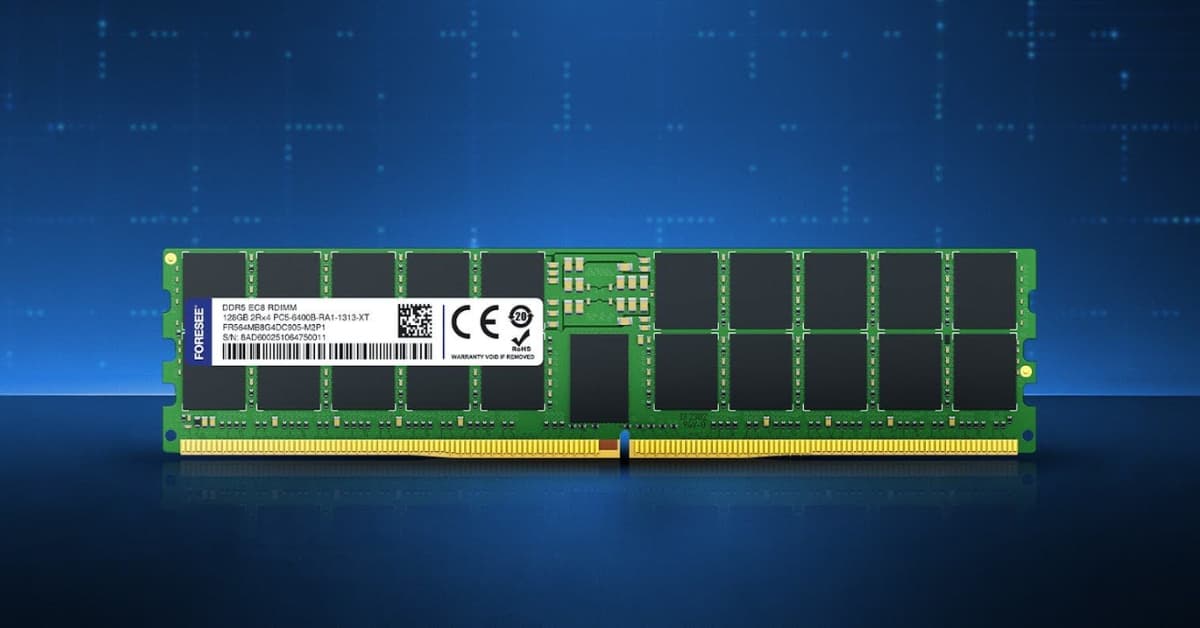
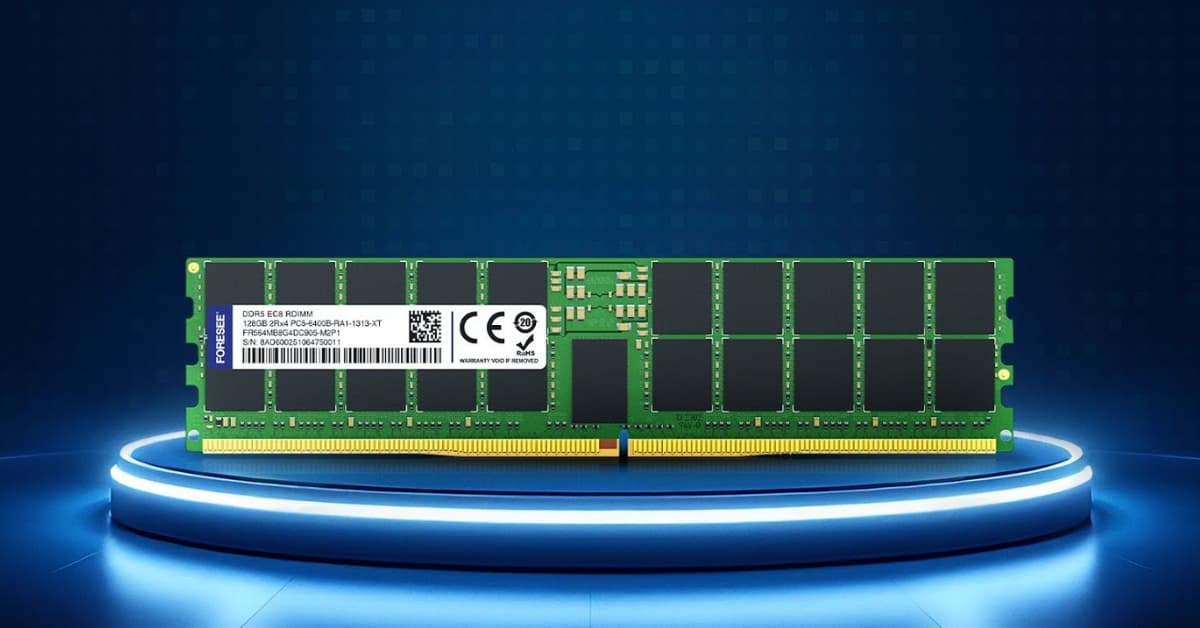
Registered dual in-line memory module (RDIMM) architecture provides the signal integrity, capacity scaling, and electrical characteristics essential for enterprise server memory systems. RDIMM technology enables the high-capacity, high-reliability memory configurations that enterprise data centers require.
RDIMM Technical Advantages:
- Register Buffering: Onboard registers reduce electrical loading, enabling stable operation with multiple high-capacity modules per channel
- Signal Integrity: Improved timing margins and reduced crosstalk supporting reliable operation at high memory speeds
- Capacity Scaling: Support for 8+ modules per channel, enabling terabyte-scale server memory configurations
- Power Management: Enhanced power delivery and thermal management supporting sustained high-performance operation
RDIMM vs UDIMM Comparison:
Unbuffered DIMM (UDIMM) technology works effectively in single or dual-module configurations but faces electrical limitations that prevent reliable scaling to enterprise capacity requirements. RDIMM architecture solves these limitations through register buffering, enabling stable operation with 16, 24, or 32 modules per server.
Key differences include:
- Electrical Loading: RDIMM reduces memory controller loading by 75% compared to equivalent UDIMM configurations
- Module Population: RDIMM supports 4-8 modules per channel vs two modules maximum for UDIMM
- Speed Scaling: RDIMM maintains rated speeds with full module population, while UDIMM speeds degrade with multiple modules
- Capacity Limits: RDIMM enables 2TB+ server configurations vs 128GB practical limits for UDIMM systems
Enterprise servers require RDIMM architecture to achieve the memory capacities and reliability levels data center applications demand. UDIMM technology cannot scale to meet enterprise requirements while maintaining the operational stability that mission-critical applications require.
ECC Protection: Essential for Data Integrity and Uptime
Error-correcting code (ECC) memory represents a fundamental requirement for enterprise server applications, where data corruption directly threatens business operations, regulatory compliance, and customer trust. ECC protection detects and corrects memory errors automatically, preventing data corruption that could cascade into system-wide failures.
Enterprise Memory Error Impact:
Server memory systems experience higher error rates than desktop applications due to larger memory capacities, continuous operation, and demanding workload patterns. Enterprise servers with large memory configurations may regularly encounter memory errors, while mission-critical applications require protection against data corruption.
Memory errors in enterprise environments cause:
- Database Corruption: Single-bit errors in database indexes or transaction logs can corrupt entire databases, requiring restoration from backups
- Application Crashes: Multi-bit errors destroy application data structures, causing immediate service failures
- Silent Data Corruption: Undetected errors modify critical data values, leading to incorrect business decisions and compliance violations
- Cascading Failures: Memory errors in virtualization layers can propagate across multiple tenant workloads
Advanced ECC Implementation:
Enterprise ECC memory implements sophisticated error detection and correction algorithms designed for continuous operation under demanding server workloads. Advanced ECC features include:
Chipkill Technology: Advanced ECC implementations can correct entire memory chip failures, not just single-bit errors. This protection ensures server operation continues even when complete memory chips fail due to manufacturing defects or wear-out mechanisms.
Memory Scrubbing: Background memory scanning detects and corrects dormant errors before they accumulate into uncorrectable multi-bit failures. Scrubbing algorithms continuously patrol memory arrays, maintaining data integrity throughout extended operational periods.
Error Logging and Reporting: Comprehensive error tracking enables proactive memory replacement before correctable errors evolve into uncorrectable failures. Enterprise memory management systems monitor error patterns and predict component failures weeks before they impact system operation.
We’ve observed enterprise environments where ECC protection prevented significant downtime costs by automatically correcting memory errors that would have crashed mission-critical applications during peak business hours.
Power-Loss Protection: Safeguarding Data During Unexpected Events
Enterprise data centers face power disturbances ranging from brief voltage fluctuations to extended outages that can corrupt memory contents and destroy critical system state. Power-loss protection mechanisms ensure data integrity during these events, preventing data corruption that could require extensive recovery procedures.
Power Disturbance Categories:
Enterprise servers encounter various power quality issues that threaten memory data integrity:
Voltage Fluctuations: Brief voltage variations can cause memory controllers to operate outside specification, leading to data corruption during read/write operations. These fluctuations occur frequently in commercial power systems but remain invisible without proper monitoring.
Power Interruptions: Sudden power loss during active memory operations can corrupt data mid-write, destroying database transactions, virtual machine state, or critical system configuration data.
Brown-out Conditions: Extended periods of reduced voltage can cause memory systems to operate unreliably while appearing functional, leading to intermittent data corruption that’s difficult to diagnose.
Power-Loss Protection Technologies: Advanced server memory systems incorporate multiple layers of power-loss protection designed to maintain data integrity during various power quality events:
Integrated Backup Power: Memory modules with integrated backup power systems can complete pending write operations during power interruptions, ensuring that critical data reaches stable storage before system shutdown.
Voltage Regulation: Advanced power management circuits maintain stable memory voltages despite input power variations, preventing voltage-related data corruption during power quality events.
Data Path Protection: Protected memory architectures implement checksums and verification algorithms that detect power-related data corruption and trigger appropriate recovery procedures.
Graceful Degradation: Intelligent power management systems can gracefully reduce memory performance during power quality events rather than risk data corruption through continued normal operation.
Critical Enterprise Applications for Server Memory
Database and Transaction Processing Systems
Enterprise database servers require memory systems combining massive capacity and absolute reliability to support mission-critical business applications. Database workloads generate intensive random access patterns while maintaining strict consistency requirements that cannot tolerate data corruption.
Financial trading platforms particularly demand memory systems with ultra-low latency and perfect reliability. Memory errors during trade execution could result in significant operational issues and regulatory concerns that far exceed the cost of proper memory system design.
Lexar Enterprise RDIMM solutions provide the capacity and reliability for demanding database applications. Our server memory modules support the large working sets of modern databases while maintaining the ECC protection and power-loss safeguards that financial applications require.
Virtualization and Cloud Infrastructure
Virtualization platforms require memory systems that efficiently share physical resources across multiple virtual machines while maintaining strict isolation between tenant workloads. Hypervisor system memory errors can simultaneously compromise multiple virtual machines, amplifying single component failures into service-wide outages.
Cloud infrastructure applications benefit from high-capacity RDIMM configurations that maximize virtual machine density while maintaining the reliability needed for multi-tenant environments. Memory overcommitment techniques require advanced memory management that depends on reliable memory operation.
Container orchestration platforms running microservices architectures demand memory systems that support rapid allocation and deallocation cycles while maintaining consistent performance across diverse workload patterns.
High-Availability and Mission-Critical Services
Mission-critical applications supporting emergency services, industrial control, and real-time communication systems require memory systems engineered for continuous operation without tolerance for failure or data corruption.
These applications often implement redundant server configurations, but memory failures can still cause service interruptions during failover procedures. Advanced ECC protection and power-loss safeguards minimize the likelihood of memory-related service disruptions.
Real-time applications require memory systems with consistent latency characteristics that don’t introduce timing variations during error correction or power management operations. These applications cannot tolerate any performance unpredictability that could affect real-time response requirements.
Lexar Enterprise Data Server Memory Solutions
Lexar Enterprise delivers RDIMM memory solutions that are engineered explicitly for enterprise data center applications. Our server memory portfolio addresses mission-critical server workloads’ unique reliability and performance demands while providing the capacity scaling that modern data centers require.
Enterprise RDIMM Specifications:
- Capacity Range: 16GB to 128GB per module, supporting multi-terabyte server configurations
- Speed Options: DDR4-3200 to DDR5-5600 with validated server platform compatibility
- ECC Protection: Advanced SECDED with chipkill support and comprehensive error logging
- Operating Voltage: Optimized power delivery with enhanced voltage regulation
- Temperature Range: 0°C to +85°C with extended thermal design margins
Enterprise Reliability Features:
- Register Buffering: High-quality registers ensuring signal integrity in high-capacity configurations
- Power-Loss Protection: Integrated backup power systems prevent data corruption during power events
- Thermal Management: Advanced heat spreader designs maintain performance under sustained server loads
- Quality Assurance: Extended burn-in testing and comprehensive compatibility validation
- Lifecycle Support: Long-term availability guarantees supporting enterprise procurement requirements
Our engineering team collaborates with server manufacturers and data center operators to validate memory configurations for specific enterprise applications, ensuring optimal performance and reliability across diverse server platforms and workloads.
Memory Configuration Strategies for Maximum Uptime
Successful enterprise memory implementation requires a comprehensive understanding of server architecture, workload characteristics, and reliability requirements. Optimal memory configurations balance capacity, performance, and redundancy within server platform capabilities and thermal management constraints.
Capacity Planning: Enterprise memory configurations must account for peak workload requirements, growth projections, and redundancy needs. Under-configured memory forces applications to rely on storage I/O, creating performance bottlenecks that can cascade into service failures during peak demand periods.
Channel Configuration: Modern server platforms support multiple memory channels that must be populated uniformly to achieve optimal bandwidth and reliability. Unbalanced memory configurations create performance hotspots and reliability vulnerabilities that can compromise overall system stability.
Redundancy Implementation: Critical server applications require memory redundancy strategies, including spare module allocation, memory mirroring, or advanced RAS features that maintain service availability during memory component failures.
Thermal Design: High-density server memory configurations generate significant heat loads that require careful thermal management. Inadequate cooling can reduce memory reliability and performance, leading to intermittent failures that are difficult to diagnose and resolve.
Monitoring and Maintenance for Server Memory Systems
Enterprise server memory requires comprehensive monitoring and proactive maintenance procedures that identify potential failures before they impact service availability. Advanced monitoring systems track memory health indicators and predict component failures weeks before they occur.
Error Rate Monitoring: Continuous tracking of correctable and uncorrectable error rates enables proactive memory replacement before reliability degrades to unacceptable levels. Error trend analysis can identify memory modules approaching end-of-life conditions.
Performance Monitoring: Memory subsystem performance monitoring detects bandwidth, latency, or throughput degradation that could indicate developing hardware problems or configuration issues affecting application performance.
Environmental Monitoring: Temperature, humidity, and power quality monitoring ensure memory systems operate within specification across all environmental conditions encountered in data center environments.
Predictive Maintenance: Advanced monitoring systems use machine learning algorithms to predict memory failures based on error patterns, environmental conditions, and operational history. This enables scheduled replacement during maintenance windows rather than emergency repairs.
Reliability Is Not Optional in Enterprise Computing
Stop accepting memory failures that threaten your uptime guarantees and compromise business-critical operations. Enterprise data server memory solutions aren’t just larger capacity modules — they’re reliability-engineered systems that protect your data center investments, maintain service level agreements, and safeguard the mission-critical applications your business depends on.
When you select Lexar Enterprise RDIMM solutions, you’re choosing memory technology that matches your uptime requirements, provides the ECC protection and power-loss safeguards your applications demand, and delivers the enterprise-grade reliability that transforms servers from potential failure points into dependable business assets. Your data center operations deserve memory systems that eliminate risk rather than create it.
Build unshakeable server reliability with confidence. Contact Lexar Enterprise to discuss your specific data center memory requirements and discover how our enterprise RDIMM solutions minimize downtime risks while maximizing the performance your critical applications require.