
Engineers and system builders often default to SATA because it’s familiar, widely supported, and seemingly sufficient for rIn today’s hyper-connected, data-driven business landscape, memory performance can make or break your entire IT infrastructure. From training complex AI models to processing real-time analytics at the edge, organizations are demanding hardware that moves faster, scales larger, and consumes less power. That’s what LPDDR5X was built for.
Originally renowned for powering high-end smartphones, Low-Power Double Data Rate (LPDDR) memory has rapidly evolved. Today, it stands as a cornerstone of modern corporate computing. For IT decision-makers and CTOs looking to future-proof their hardware, understanding this technology is a strategic necessity.
Let’s dive deep into what this technology is, unpack its blazing speeds and specifications, and explore its unmatched data processing capabilities.
What is LPDDR5X?
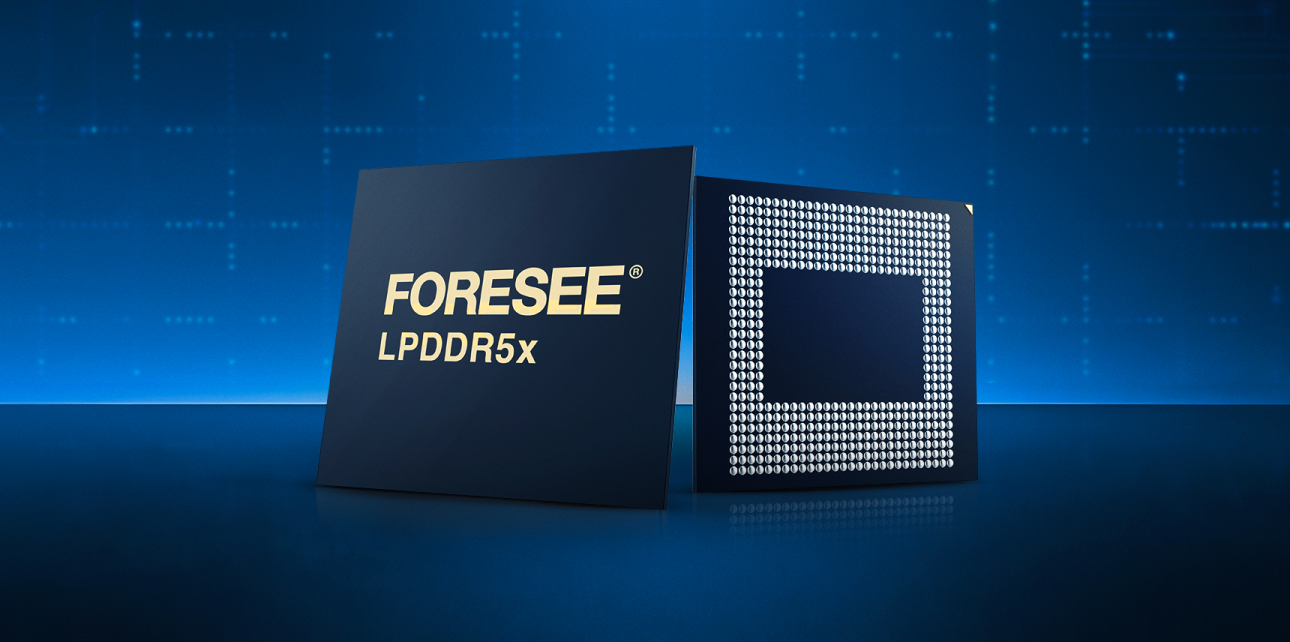
LPDDR5X is the latest iteration of low-power synchronous dynamic random-access memory. Designed to deliver uncompromising speeds while strictly managing power draw, it bridges the gap between high-performance computing and energy efficiency.
The next-generation LPDDR5X memory architecture is built specifically to handle intensive compute loads in environments where space, thermal output, and power consumption are heavily restricted. Unlike standard memory modules that easily overheat under continuous strain, LPDDR5X is engineered to operate efficiently, making it the premier choice for modern servers, edge devices, and portable workstations.
Unpacking LPDDR5X Specifications and Speed
To understand why this memory is transforming tech, we have to look closely at the numbers. The baseline LPDDR5X specifications represent a massive leap forward in both speed and efficiency.
Clock Speeds and Throughput
LPDDR5X is capable of achieving speeds of up to 9600Mbps. This represents a significant boost in base LPDDR5X speed compared to its predecessors.
When evaluating LPDDR5X clock speed and throughput specifications, enterprise architects will find that the design dramatically increases data throughput, allowing CPUs and GPUs to access stored information with near-zero bottlenecking.
Density and Capacity
Scalability is just as important as speed. Modern LPDDR5X capacity allows for incredibly dense memory packaging. Through advanced manufacturing nodes and die-stacking technologies, Lexar Enterprise deploys chips with capacities ranging from 16GB up to 64GB in a single, ultra-thin package. This high density is crucial for server environments where physical real estate is at an absolute premium.
How LPDDR5X Compares to LPDDR5 and Standard DDR5
To truly appreciate the value of LPDDR5X, it helps to benchmark it against other memory standards currently deployed in corporate environments.
LPDDR5 vs LPDDR5X Performance Comparison
While LPDDR5 was a breakthrough, LPDDR5X pushes the envelope even further. In a direct LPDDR5 vs LPDDR5X performance comparison, the “x” variant provides approximately 33% higher bandwidth (jumping from 6400Mbps to 9600Mbps). Furthermore, it manages to achieve these speeds while drawing roughly 20% less power. For businesses running hundreds of nodes, this efficiency translates directly to massive cost savings.
Comparing LPDDR5X and Standard DDR5 for Industrial Use
Let’s also consider the differences between LPDDR5X and standard DDR5 for industrial use. Standard DDR5 offers incredible peak performance and module upgradeability (via DIMM slots). However, DDR5 consumes significantly more baseline power. LPDDR5X, conversely, is typically soldered directly to the motherboard, allowing for a much smaller physical footprint and a dramatically lower power draw. For rugged industrial IoT devices, compact edge servers, and tightly packed server racks, LPDDR5X is often the superior architectural choice.
Advanced Data Processing Capabilities
Enterprise computing is now about processing massive pipelines of data in real-time. Here is how LPDDR5X enables the most demanding modern workloads.
Accelerating AI and Machine Learning
AI models require feeding vast amounts of data into processors simultaneously. LPDDR5X serves as the perfect low-power memory for AI and machine learning workloads. By delivering incredibly high bandwidth without generating excessive heat, it allows AI accelerators to run continuously at peak performance, accelerating training times and improving inference speeds.
Mastering Big Data
When dealing with massive datasets, memory bandwidth is often the primary bottleneck. The superior LPDDR5X bandwidth capacity for big data processing ensures that analytics platforms can ingest, sort, and query petabytes of information without lag. Whether you are running complex financial models or predictive supply chain analytics, the ultra-wide data pipelines of LPDDR5X keep the processors fed and operational.
Powering the Edge
Edge computing brings data processing closer to the source of data generation, heavily reducing reliance on central cloud servers. However, edge devices are often compact and have strict power limits. Reducing latency in edge computing with LPDDR5X has become a game-changer. It allows remote servers, autonomous manufacturing robotics, and smart-city infrastructure to process data instantly on-site, enabling true real-time decision-making.
Elevating the Mobile Workforce
Modern professionals demand desktop-level power on the go. There are profound benefits of LPDDR5X for mobile workstations. By integrating this low-power memory into corporate laptops, manufacturers can offer devices with all-day battery life that are still fully capable of handling CAD rendering, massive spreadsheets, and local machine learning tasks.
Power Efficiency, Reliability, and Thermal Management
Performance is only half the equation. In the enterprise sector, total cost of ownership (TCO) is heavily dictated by energy bills, cooling costs, and hardware lifespan.
Revolutionizing the Data Center
LPDDR5X power efficiency in data centers is fundamentally changing how IT facilities operate. Memory can account for up to 30% of a server’s overall power consumption. By integrating ultra-efficient LPDDR5X modules, organizations are successfully optimizing server energy consumption, significantly lowering their monthly utility overhead and helping them reach ambitious corporate sustainability and Environmental, Social, and Governance (ESG) goals.
Advanced Thermal Management
Heat is the enemy of electronic components. The thermal management benefits of low-voltage LPDDR5X cannot be overstated. Operating at extremely low voltages, these chips generate a fraction of the heat of standard enterprise memory. This translates to less reliance on aggressive, power-hungry cooling fans and HVAC systems, allowing for denser server packing without the risk of thermal throttling.
Uncompromising Durability
When hardware fails, businesses lose money. Consequently, top-tier memory must meet rigorous enterprise-grade LPDDR5X reliability and durability standards. Features like advanced Error Correction Code (ECC) are built into the architecture to automatically detect and correct single-bit memory errors, preventing data corruption and sudden system crashes. This ensures your mission-critical applications remain stable 24/7/365.
Actionable Tips: Upgrading Your Infrastructure
If you are planning an IT refresh, understanding how to choose memory for high-density computing will save you both time and capital. Here are a few actionable tips:
- Audit Your Workloads: Not all applications require 9600Mbps. Identify your most memory-bound workloads (like AI inference or big data analytics) and prioritize LPDDR5X deployment in those specific clusters.
- Evaluate TCO over Upfront Costs: LPDDR5X systems might have a different upfront cost structure compared to legacy DDR4/DDR5 servers. Always factor in the projected savings from reduced energy consumption and cooling over a 3-to-5-year lifecycle.
- Partner with Proven Leaders: The manufacturing quality of soldered low-power memory is highly dependent on the vendor. Always choose memory solutions from established, reliable brands that subject their hardware to rigorous testing.
Lexar Enterprise: Leading the Memory Revolution
When migrating to next-generation architectures, selecting the right hardware partner is paramount.
Lexar Enterprise has leveraged decades of memory manufacturing expertise to engineer products explicitly tailored for the uncompromising demands of the modern corporate world.
By utilizing heavily vetted silicon, enforcing strict quality control protocols, and prioritizing both speed and thermal efficiency, Lexar Enterprise ensures that their LPDDR5X memory modules consistently exceed industry standards. Whether you are outfitting a fleet of mobile workstations or upgrading a high-density server farm, Lexar Enterprise provides the peace of mind that your data is flowing rapidly, securely, and efficiently.
To fully understand the current market shift, one must look at the comprehensive picture. Now that we’re in an era with reliable, high-performance LPDDR5X solutions, forward-thinking companies are making the switch. Lexar Enterprise’s commitment to pushing the boundaries of what low-power memory can achieve ensures that businesses have the reliable backbone needed to scale into the future.
Conclusion
The era of choosing between raw computing power and energy efficiency is over. As artificial intelligence, big data analytics, and edge processing continue to dominate corporate IT strategies, LPDDR5X stands out as the ultimate enabler. With data transfer rates pushing 9600Mbps, incredible power efficiency, and advanced thermal management, it is the clear choice for the modern, high-density enterprise.
By aligning your infrastructure upgrades with industry innovators like Lexar Enterprise, your organization can seamlessly navigate the complexities of tomorrow’s digital workloads. Whether it’s equipping a data center, or rolling out workforce equipment upgrades, Lexar Enterprise is here to help you enjoy faster insights, lower operating costs, and uncompromising system reliability.