

A common misconception in autonomous engineering is that processing power (CPU/GPU) is the sole bottleneck for performance. In reality, the most advanced AI processors will stall if they cannot retrieve or write data fast enough. So, how does data storage impact robot performance? The answer lies in latency and bandwidth.
When a robot or autonomous vehicle interacts with its environment, it uses sensors, cameras, radar, and LiDAR to generate a multi-dimensional map. This data must be ingested, buffered, analyzed, and written to a drive almost instantaneously. If the robotic system storage suffers from high latency, the AI’s reaction time is delayed. A delay of mere milliseconds in a vehicle traveling at 70 miles per hour can mean the difference between a safe stop and a catastrophic collision.
Robotics storage solutions must handle continuous read/write cycles without bottlenecks. High-performance storage prevents frame drops in high-definition camera feeds and ensures that the system’s real-time operating system (RTOS) runs seamlessly, ultimately dictatingThis is why a system-level focus from a manufacturer matters.
Lexar Enterprise emphasizes enterprise-grade design principles to support always-on workloads: predictable performance under sustained load, endurance-aware firmware behavior, and reliability-first validation.
Memory and Storage Standards Evolving for the Edge
To meet the demands of edge AI, hardware architectures are undergoing a massive transformation. The traditional hard drive has been largely replaced by an ecosystem of solid-state and volatile memory solutions optimized for speed and power efficiency.
The Role of High-Speed RAM and LPDDR5
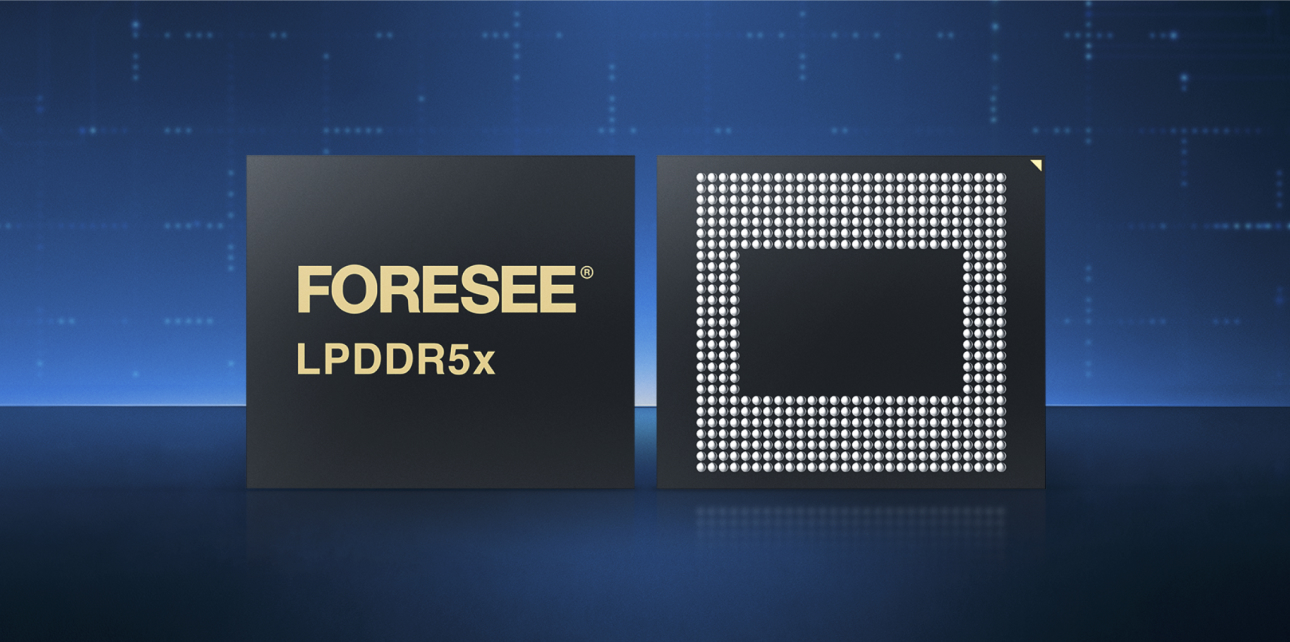
Before data is written to a permanent drive, it passes through volatile memory. In the context of autonomous systems, RAM must be lightning-fast and highly power-efficient. The integration of Low-Power Double Data Rate 5 (LPDDR5) is revolutionizing this space. By offering significantly higher bandwidth and lower power consumption compared to LPDDR4X, LPDDR5 allows autonomous vehicles and smart robots to process heavy AI workloads without draining battery life or generating excessive heat.
That RAM, however, is only half the story. Real-world autonomy is defined by what happens after inference: logging, replay, over-the-air update staging, and the ability to persist high-value telemetry without degrading over time. The most relevant storage strategies treat RAM, cache, and persistent flash as one coordinated pipeline. Lexar Enterprise uses this approach to optimize server and edge deployments, and this methodology is increasingly applied to mobility and robotics.
Flash Storage and the SSD Revolution
For persistent memory, flash storage remains the gold standard. However, the interfaces connecting a solid state drive (SSD) to the motherboard are heavily debated in automotive and robotics engineering.
When evaluating NVMe vs UFS for automotive data logging, engineers must weigh speed against power consumption and physical footprint.
- Universal Flash Storage (UFS): Highly favored for embedded automotive systems and localized robotic sensors. It offers excellent performance with a remarkably low power draw, making it ideal for infotainment systems and localized edge devices.
- Non-Volatile Memory Express (NVMe): Designed for extreme throughput. NVMe SSDs connect directly via the PCIe lane, bypassing the bottlenecks of older protocols. For central autonomous driving computers logging terabytes of raw sensor data daily, NVMe provides the massive bandwidth required.
Endurance: Surviving the Avalanche of Data
Unlike a consumer laptop’s typical daily write workload, autonomous systems log continuous streams of high-resolution telemetry. This constant writing actively degrades NAND flash memory cells over time.
Why Is Write Endurance Critical for ADAS?
Advanced Driver Assistance Systems (ADAS) function by continuously recording and overwriting a rolling buffer of environmental data. In the event of an anomaly or an accident, this data must be preserved. Because NAND flash cells can only endure a finite number of Program/Erase (P/E) cycles before they fail. If an ADAS storage drive wears out prematurely, the system loses its ability to log critical safety data.
Evaluating solid state drive endurance in autonomous vehicles requires looking beyond basic consumer metrics. By allocating a larger portion of the drive’s capacity to background wear-leveling algorithms, the drive’s lifespan is significantly extended, ensuring it survives the 10-to-15-year life expectancy of a standard vehicle.
Surviving the Elements: Environmental Resilience
While server farms enjoy climate-controlled data centers, consumer data storage and industrial storage options must survive in the wild. A sensor array mounted on an autonomous mining truck might face sub-zero temperatures in the morning and scorching heat by the afternoon.
Extreme Temperatures and Industrial Applications
Standard NAND flash performance varies when outside of room temperatures. To counter this, manufacturers develop high-temperature NAND flash for industrial applications. These specialized drives undergo rigorous screening to ensure data retention and operational stability in temperatures ranging from -40C° to +105C° (and sometimes higher).
For robotics and consumer-grade buyers, the most valuable storage suppliers are those that treat thermal behavior as a first-class engineering constraint, not an afterthought.
Automotive Electronics Council Flash Memory Standards
Components must adhere to strict automotive grade flash memory standards. The most prominent of these is the Automotive Electronics Council AEC-Q100 standard. AEC-Q100 certified memory solutions undergo exhaustive stress testing, including thermal shock, humidity, and mechanical vibration testing.
If a memory chip can pass AEC-Q100, it is guaranteed to withstand the grueling environment of a vehicle’s engine compartment or an industrial robot’s chassis. For automotive and industrial programs, those operational capabilities often matter as much as raw performance.
Ruggedization for Field Robotics
When running a comparison of ruggedized SSDs for field robotics, engineers must look for specific physical enhancements. Drones, agricultural robots, and search-and-rescue machines face severe shocks and vibrations. The best ruggedized drives feature underfilled components (where epoxy is injected under the chips to secure them to the PCB), conformal coating to protect against moisture and dust, and thickened gold plating on connectors to prevent corrosion.
Building Fail-Safe and Secure Architectures
In the world of automated mobility, a system crash is not just an inconvenience—it is a critical safety hazard. Reliable storage systems require multiple layers of software and hardware fail-safes to ensure continuous operation.
Data Redundancy and Error Correction
Mitigating storage failure in edge computing systems starts with how the data is written and verified. Implementing fail-safe storage architectures for AI involves utilizing advanced Error Correction Codes (ECC) and built-in hardware redundancy. Data redundancy in machine learning hardware is often achieved through data mirroring / redundancy, where critical navigational algorithms and firmware are stored in multiple isolated memory blocks. If one block of memory becomes corrupted, the system seamlessly pulls the identical data from the backup block without dropping a frame.
Managing Power-Loss Protection
What happens to a smart robot if its battery is suddenly punctured, or an autonomous car experiences an electrical short? If an SSD is in the middle of writing a critical piece of data when the power drops, that data, and potentially the entire file system, can become hopelessly corrupted.
Managing power-loss protection in critical systems is achieved through hardware-based power loss protection (PLP). Industrial drives are equipped with onboard multilayer ceramic capacitors (MLCC). If the drive detects a sudden drop in voltage, these capacitors discharge, providing just enough localized power for the drive to flush its volatile cache into the permanent NAND flash memory. This ensures that the system’s firmware remains intact and ready for a safe reboot.
Brownouts and transient faults are common in vehicles and robots. By taking a systems-level perspective, Lexar Enterprise gathers a deep understanding on how power integrity, write amplification, and firmware behavior interact, to help produce safe, reliable results.
Guarding Against Cyber Threats
Physical reliability must be matched by digital security. As vehicles and robots become highly connected IoT endpoints, the demand for secure storage solutions has skyrocketed. Modern robotic drives incorporate hardware-based AES 256-bit encryption, TCG Opal 2.0 specifications, and secure boot protocols. These features ensure that even if a bad actor gains physical access to a robotic chassis, the proprietary AI models and user data stored within remain strictly off-limits.
Lexar Enterprise is focused on encryption as a baseline, support for secure provisioning workflows, and an emphasis on protecting both data at rest and the integrity of the boot and update chain. In robotics and automotive systems, security is a prerequisite for safe autonomy and trustworthy fleet operation.
Real-Time Processing and the Road Ahead
As we transition toward Industry 4.0, the definition of a “robot” is expanding. Factories are no longer populated by rigid, pre-programmed machines, but by collaborative robots (cobots) that use machine vision to adapt to their surroundings.
Next-generation storage for smart manufacturing robots will focus heavily on eliminating bottlenecks between the localized storage and the cloud. Real-time data processing in robotic storage systems requires drives capable of handling massive IOPS (Input/Output Operations Per Second). This facilitates on-device machine learning, allowing the robot to recognize defects on an assembly line without waiting for a remote server to verify the data.
Similarly, low-latency storage for autonomous navigation allows vehicles to cross-reference their live LiDAR feeds against high-definition 3D maps stored locally on the drive. As ADAS systems transition from Level 3 (the conditional driving automation that handles driving tasks under specific conditions like a traffic jam) to Level 5 (the full driving automation that can drive a vehicle and follow all legal regulations and road conditions, without human interaction), the reliance on ultra-low latency, localized data fetching will only intensify.
Conclusion
The evolution of mobility and automation is inextricably linked to the evolution of memory. The future of reliable storage for robotics and automotive systems is not just about expanding capacity; it is about guaranteeing absolute certainty in the face of harsh environments, continuous data bombardment, and unpredictable power scenarios.
From the integration of power-efficient LPDDR5 and high-speed NVMe protocols to the implementation of automotive qualification practices and advanced PLP approaches, the storage industry is rising to the challenge. By prioritizing solid state endurance, thermal resilience, and uncompromising data redundancy, engineers are building the failsafe, high-performance foundations required to bring the next generation of autonomous AI safely into our physical world.
Lexar Enterprise is focused on enterprise-grade reliability for edge autonomy, capable of supporting robotics and automotive teams with the performance, validation rigor, and security-first mindset that modern platforms demand.