
Automotive engineers often select storage interfaces based on familiarity or legacy platform constraints rather than matching the Wearable medical devices have transformed the way clinicians monitor patients. From continuous glucose monitors (CGMs) that track blood sugar every five minutes, to cardiac patches that record a patient’s every heartbeat over 30 days, wearables have opened up a world of always-on, real-world health data that was simply not possible a generation ago.
But with this capability comes a profound engineering challenge: how do you store that data reliably, continuously, and securely on a device that sits on someone’s wrist, chest, or arm?
This isn’t just a technical puzzle. In the medical device world, data storage failures can mean missed diagnoses, compromised patient safety, and serious regulatory consequences. Getting storage architecture right is one of the most critical, and frequently underestimated, challenges in wearable medtech.
This article explores the key obstacles medical device engineers face when designing long-term, continuous patient data storage for wearables, and how enterprise-grade flash storage solutions are increasingly part of the answer.
The Scale of the Problem: Just How Much Data Do Wearables Generate?
Before diving into solutions, it’s worth understanding the sheer volume of data that modern medical wearables produce.
Consider a few examples:
- Continuous glucose monitors typically sample glucose levels every 1–5 minutes, generating modest but persistent data streams over device lifetimes of 7–14 days per sensor.
- Cardiac event monitors can record continuous ECG data at 250–500 samples per second per lead, with multi-lead devices producing several megabytes of raw waveform data per hour.
- Ambulatory EEG patches for epilepsy monitoring may need to store days or weeks of multi-channel neural signal data continuously.
- Smart patches for post-surgical monitoring may track heart rate, respiration rate, SpO2, temperature, and activity simultaneously.
Multiply any of these data rates by days or weeks of continuous wear, and you quickly arrive at multi-gigabyte storage requirements — on a device that must remain small, lightweight, low-power, and rugged enough to survive daily life. This is the core tension in wearable medical device design.
Key Challenges in Long-Term Wearable Data Storage
1. Storage Capacity vs. Form Factor
Medical wearables are defined by their physical constraints. A cardiac patch designed to be worn for 14 days can’t be the size of a smartphone. A CGM sensor must be small enough to attach to the upper arm discreetly.
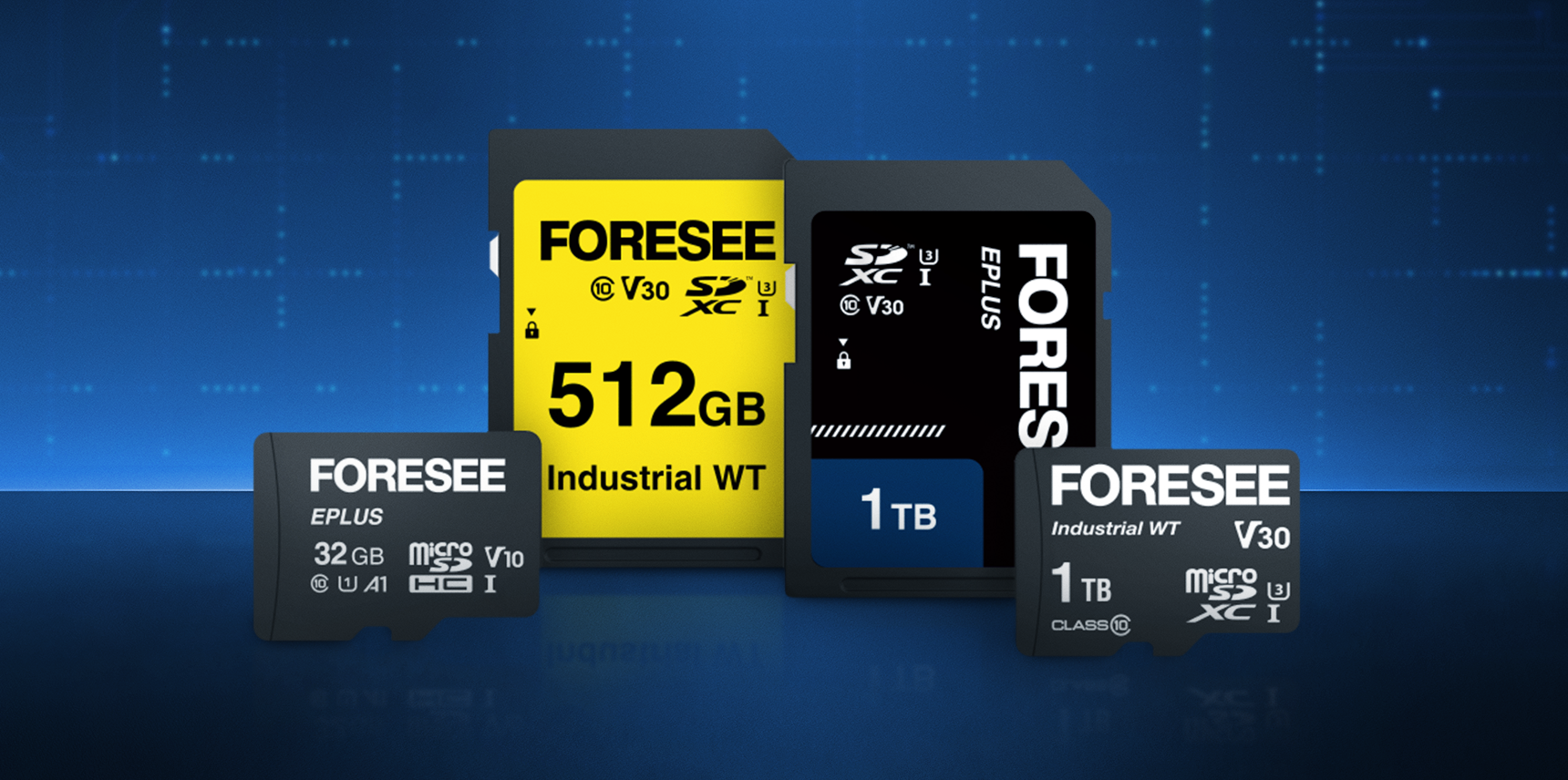
This puts engineers in a direct tradeoff between storage capacity and physical size. High-capacity flash storage modules in compact form factors like embedded MMC (eMMC) or industrial microSD cards are the prevailing solution.
Consumer-grade cards may lack the write endurance, data retention guarantees, and reliability specifications that a life-critical application demands.
Lexar Enterprise industrial-grade storage solutions are purpose-built for exactly these environments. Designed for integration into wearable medical devices, Lexar Enterprise storage solutions are ideal for platforms where both space and reliability are non-negotiable.
2. Write Endurance and Wear Leveling
Flash memory has a finite number of write cycles. In a standard consumer device, this limitation is rarely a problem. But wearable medical devices continuously write data 24 hours a day.
A cardiac monitor recording ECG continuously at 500Hz is writing data to storage non-stop for the entire wear period. Over the commercial lifetime of a device model cumulative write workloads can be enormous.
Wear leveling algorithms in the flash controller help distribute writes evenly across memory cells to extend device lifetime. But the quality of the wear-leveling implementation varies significantly between consumer and enterprise/industrial-grade storage. Industrial-grade parts will also carry significantly higher terabytes written (TBW) ratings than consumer equivalents, even at similar capacities.
3. Power Consumption
Wearable medical devices are almost universally battery-powered, often with strict power budgets to maximize charges. Storage is one of the most significant contributors to active power draw during data logging.
Flash storage draws power during read, write, and erase operations. On a device writing data continuously, even small per-operation inefficiencies compound into meaningful battery drain. Engineers must carefully select storage parts with low operating and standby power profiles.
4. Data Integrity and Error Correction
Patient data must be complete and accurate. In a clinical or regulatory context, corrupted or missing data can mean a missed atrial fibrillation episode, a lost hypoglycemic event, or a gap in a post-surgical monitoring record.
Industrial-grade flash storage incorporates robust error correcting code (ECC) to detect and correct bit errors that occur over time. More advanced implementations use multi-bit ECC, which can correct multiple simultaneous bit errors, which becomes more common in aged or heavily written flash memory.
Beyond hardware ECC, firmware-level data integrity features, such as power-loss protection (PLP), ensure that in-flight writes are not corrupted if the device loses power unexpectedly.
5. Operating Environment: Temperature, Humidity, and Vibration
Wearables operate in challenging environments. A cardiac patch goes everywhere its wearer does. Sweat, moisture, and mechanical stress from body movement are ever-present.
Consumer flash storage is typically rated for a narrow temperature range (0°C to +70°C) and standard humidity. Industrial-grade components are rated for wider temperature ranges (often -40°C to +85°C) and are manufactured to higher tolerances for humidity and mechanical shock.
6. Regulatory and Data Retention Requirements
Medical devices in the United States are subject to FDA regulation, and data storage plays a role in multiple aspects of compliance. Under 21 CFR Part 11 and related FDA guidance, electronic records must be reliable, accurate, and complete. For devices that transmit data to Electronic Health Record (EHR) systems or are used in clinical trials, the integrity and availability of stored data is directly relevant to regulatory submissions.
The EU Medical Device Regulation (EU MDR) and IEC 62304 (software lifecycle) similarly impose requirements on data handling and traceability for software and firmware in medical devices.
Beyond regulatory compliance, clinical use cases often require long retention windows. A 30-day cardiac monitor may need to retain all recorded data until it is offloaded and verified by a clinician. That data needs protection from being overwritten, compressed aggressively, or lost due to a storage failure.
Architectural Approaches to Wearable Data Storage
Given these challenges, medical device engineers typically employ one of several storage architectures, often in combination:
On-Device Local Storage Only
For simpler devices or those designed for short wear periods (24–72 hours), all data is stored locally and offloaded at end of session. This simplifies the architecture but limits wear duration and puts all eggs in a single storage basket with no redundancy.
Buffered Local + Wireless Offload
Most modern connected wearables use a hybrid approach: data is continuously written to local storage as a primary buffer, while a Bluetooth or cellular connection offloads data to a smartphone app or cloud backend in near-real-time. Local storage serves as a safety net if connectivity is lost.
This is arguably the most common architecture for consumer health wearables and is increasingly adopted in clinical-grade devices. It reduces the local storage capacity required but adds complexity around synchronization and data deduplication.
Tiered Storage
Some more sophisticated wearable platforms use tiered storage. For example: a small, fast SRAM or DRAM cache for the most recent seconds or minutes of data, feeding into a larger flash storage layer for medium-term buffering, with periodic offload to cloud or clinical systems for long-term retention.
In all of these architectures, the quality and reliability of the flash storage layer remains the critical factor for ensuring no data is lost between offload events.
What Medical Device Engineers Should Look for in Storage Components
When evaluating flash storage for a wearable medical device program, engineers should consider the following criteria:
- Write endurance (TBW/DWPD): Ensure the component’s Total Bytes Written (TBW) rating covers expected device lifetime and use case.
- Power-loss protection (PLP): Critical for ensuring write integrity in battery-powered devices.
- Low-power operation: Ensures functionality using a very-low standby current.
- Operating temperature range: Match the component spec to your device’s expected environmental conditions.
- Form factor compatibility: Evaluate eMMC, industrial microSD, CFexpress, or other form factors against your board layout and mechanical design constraints.
- Long-term supply availability: Medical device programs span years. Enterprise storage vendors like Lexar Enterprise offer product longevity commitments and extended availability windows that consumer channels cannot match.
- Documentation and traceability: For regulatory submissions, comprehensive datasheets, qualification test reports, and traceability documentation from your storage vendor are essential.
The Role of Lexar Enterprise in Medical Wearable Storage
The Lexar Enterprise product portfolio includes industrial microSD cards, microSD express cards, eMMC modules, and solid-state drive storage solutions engineered for high-endurance, wide-temperature-range environments.
For medical device OEMs developing wearable platforms, Lexar Enterprise products offer several relevant advantages:
- Industrial-grade endurance ratings that support continuous write workloads typical of biosignal recording applications.
- Extended temperature specifications suited to body-worn devices exposed to variable environmental conditions.
- Power-loss protection features that safeguard data integrity on battery-operated devices.
- Long product lifecycle commitments that align with the multi-year timelines of medical device development and post-market support.
- Detailed technical documentation that supports design verification, regulatory submissions, and supply chain qualification activities.
As wearable medical devices become more capable, the performance envelope demanded of embedded storage components will only grow. Partnering with an enterprise storage vendor from early in the design cycle is a mark of mature medical device development practice.
Looking Ahead: The Future of Wearable Medical Data Storage
Several trends will shape how the industry approaches wearable data storage over the next five years:
Edge AI and on-device processing will increasingly allow wearables to perform signal processing, anomaly detection, and data compression locally, reducing raw storage requirements by storing clinically relevant events rather than every raw sample. However, running AI inference on-device also requires loading model weights from storage, adding a new dimension to storage architecture design.
Higher-fidelity sensing like multi-lead ECG patches, high-resolution EEG wearables, continuous blood pressure monitoring will push raw data rates higher even as compression helps manage them.
Longer wear periods will become commercially and clinically important, particularly in chronic disease management. 30-day cardiac monitors are already commercially available; longer-duration devices are in development. Each extension in wear duration multiplies the demands placed on storage endurance.
Stricter regulatory scrutiny of software and data integrity in medical devices, particularly in the EU under MDR and in the US under updated FDA guidance, will raise the bar for the documentation and validation evidence required for embedded storage components.
Conclusion
Wearable medical devices represent one of the most exciting frontiers in modern healthcare, but they are one of the most demanding environments for embedded storage technology. The combination of continuous write workloads, harsh physical conditions, strict data integrity requirements, and regulatory obligations makes storage component selection a critical decision.
Engineers designing wearable medical platforms must approach storage with the same rigor applied to other life-critical components. That means moving beyond consumer-grade flash and engaging with enterprise and industrial storage providers, like Lexar Enterprise, who can offer the endurance, reliability, documentation, and longevity that medical-grade applications demand.
The right storage foundation doesn’t just protect patient data. It protects patients.
Looking to spec storage for your next wearable medical device platform? Explore Lexar Enterprise’s industrial storage portfolio for solutions designed to meet the demands of continuous, long-term embedded data applications.