


Sharing Our Best Knowledge
Welcome to Lexar’s Knowledge Sharing page, a hub for white papers and other thought leadership resources that cover matters concerning the memory and storage solutions industry. When you request access, we will send you an email link to download.
AI Didn’t Just Change Computing It Changed the Value of Memory
Executive Summary
There are moments in every industry that fundamentally change its trajectory. For the memory industry, I believe we’re living through one of those moments.
The AI Boom has Changed Storage Supply
Executive Summary
AI is pulling a lot of capacity toward data center and enterprise needs. When supply gets tight, consumer categories—especially the most price-driven ones— tend to feel it first.

Delivering Efficient Performance at Scale
Executive Summary
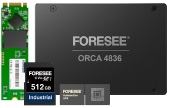
At Lexar Enterprise, memory is more than storage—it is a critical component of reliable, efficient system performance. Through our FORESEE™ product brand, we deliver purpose-built memory solutions designed to support embedded and connected systems operating under real-world constraints.
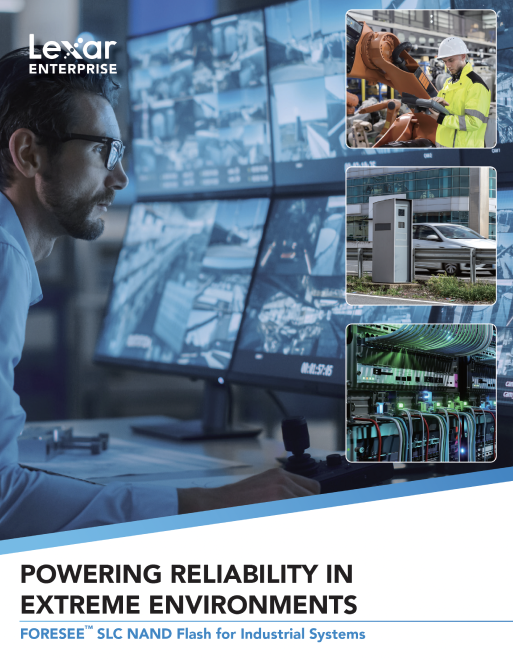
Powering Reliability In Extreme Environments
Executive Summary
At Lexar Enterprise, memory is more than storage—it’s the foundation of reliable system performance. Through our FORESEE™ product brand, we deliver purpose-built memory solutions designed to meet the demands of industrial, embedded, and connected devices operating in real-world conditions. This success story highlights how FORESEE SLC NAND Flash helped an industrial access device manufacturer achieve reliability targets in high-temperature environments—reducing failures, minimizing site swaps, and accelerating deployment.
