
The fundamental distinction between PCIe NVMe and SATA III extends beyond raw bandwidth specifications to encompass protocol architecture, command processing methodology, and system-level integration approaches.
SATA III employs the Advanced Host Controller Interface (AHCI) protocol, originally designed for mechanical hard disk drives with rotating platters. AHCI uses a single command queue with a maximum depth of 32 commands, reflecting the sequential access patterns and mechanical seek latencies of HDDs. The SATA interface connects storage devices to the system via a dedicated SATA controller, which communicates with the CPU via slower system buses.
This indirect connection introduces protocol overhead and limits parallel processing capabilities. SATA III specifications define maximum interface bandwidth of 6Gb/s, which translates to approximately 550MB/s to 600MB/s actual throughput after 8b/10b encoding overhead.
PCIe on-volatile memory express (NVMe) was developed specifically for solid-state storage to eliminate the bottlenecks AHCI imposes on flash memory performance. NVMe connects storage devices directly to the CPU via PCIe lanes, bypassing the intermediate controller layers required by SATA.
This direct connection reduces latency and enables the NVMe protocol to leverage PCIe’s native bandwidth. NVMe supports up to 65,535 command queues, with each queue capable of handling 65,536 commands.
The PCIe interface provides scalable bandwidth through lane configuration and generational improvements. PCIe operates in 1x, 2x, 4x, 8x, or 16x lane configurations, with most NVMe SSDs implementing 4x lanes (x4) for optimal cost-performance balance. Each PCIe generation doubles the per-lane bandwidth compared to the previous generation. PCIe 3.0 delivers approximately 985 MB/s per lane, enabling PCIe 3.0 x4 devices to reach 3.9 GB/s theoretical throughput, and so on.
Command-processing latency varies significantly across the interfaces. For automotive applications that process real-time sensor data or industrial systems that execute time-critical control loops, this latency reduction directly affects system responsiveness.
Power management capabilities also diverge between the interfaces. SATA implements relatively basic power states with limited granularity, while NVMe defines multiple power states with fine control over power consumption during active operation and idle periods. This sophisticated power management enables NVMe drives to optimize power consumption dynamically based on workload.
Performance Comparison: Bandwidth, IOPS, and Latency Across Interface Types
Raw performance specifications reveal substantial differences between SATA III and NVMe interfaces, but understanding how these specifications translate to real-world application performance requires examining sequential throughput, random I/O operations per second, and access latency under various workload conditions.
Sequential read and write performance represents the most straightforward comparison metric. SATA III achieves approximately 600 MB/s for both reads and writes, constrained by the 6 Gb/s interface specification, regardless of the underlying NAND flash capabilities. Modern SATA SSDs achieve performance near this ceiling, indicating that further improvements require an interface transition rather than NAND optimization.
Random I/O operations per second (IOPS) measure small-block access performance, which is critical for database operations, operating system responsiveness, and applications with unpredictable access patterns.
SATA SSDs typically deliver up to 100,000 random read IOPS and up to 90,000 random write IOPS. NVMe drives leverage their parallel command architecture to achieve up to 750,000 random read IOPS and up to 600,000 random write IOPS for PCIe 3.0 implementations. PCIe 4.0 NVMe can exceed 1,000,000 IOPS for both reads and writes. This 5x to 10x improvement significantly improves system responsiveness for embedded operating systems, real-time databases, and industrial applications that require rapid access to distributed data.
Access latency is the time between requesting data and receiving the first byte, and differs substantially due to protocol overhead. SATA SSDs exhibit typical read/write latencies of up to 200 microseconds and write latencies up to 100 microseconds. NVMe drives reduce read latency to 30-80 microseconds and write latency to 20-50 microseconds by eliminating AHCI protocol overhead and reducing the command path length.
Sustained write performance under continuous operation reveals another performance distinction. SATA SSDs maintain relatively consistent performance across sustained write workloads because the interface bandwidth limits peak performance to levels most SSDs can sustain indefinitely. NVMe drives often implement SLC write caches to boost burst performance, which means sustained write performance may drop when the cache fills.
Performance Specifications Summary
- SATA III Sequential: 550MB/s-600MB/s read and write maximum, regardless of SSD capabilities
- PCIe 3.0 NVMe Sequential: 2000MB/s-3500MB/s read, 1500MB/s-3000MB/s write – 4-6x SATA performance
- PCIe 4.0 NVMe Sequential: 5000MB/s-7000MB/s read, 4000MB/s-6000MB/s write – 8-12x SATA performance
- SATA III Random IOPS: 80,000-100,000 read, 60,000-90,000 write operations per second
- NVMe Random IOPS: 400,000-1,000,000+ operations per second, depending on PCIe generation
- Access Latency: SATA 100-200μs read, NVMe 30-80μs read – 2-3x latency reduction
Form Factor and Physical Integration Considerations
Physical implementation differs significantly between SATA and NVMe storage, thereby affecting PCB layout, connector availability, thermal management, and mechanical integration within space-constrained automotive and industrial enclosures.
SATA SSDs predominantly use a 2.5-inch form factor with a standardized 7mm height, which matches the physical dimensions established by 2.5-inch HDDs. This form factor requires dedicated mounting locations and SATA data plus power cable connections. The cable-based connection introduces flexibility for drive positioning but consumes PCB connector footprint and complicates cable routing in compact enclosures. Industrial applications often prefer 2.5-inch SATA SSDs because mounting solutions and shock- and vibration-isolation methods are well established through decades of HDD deployment.
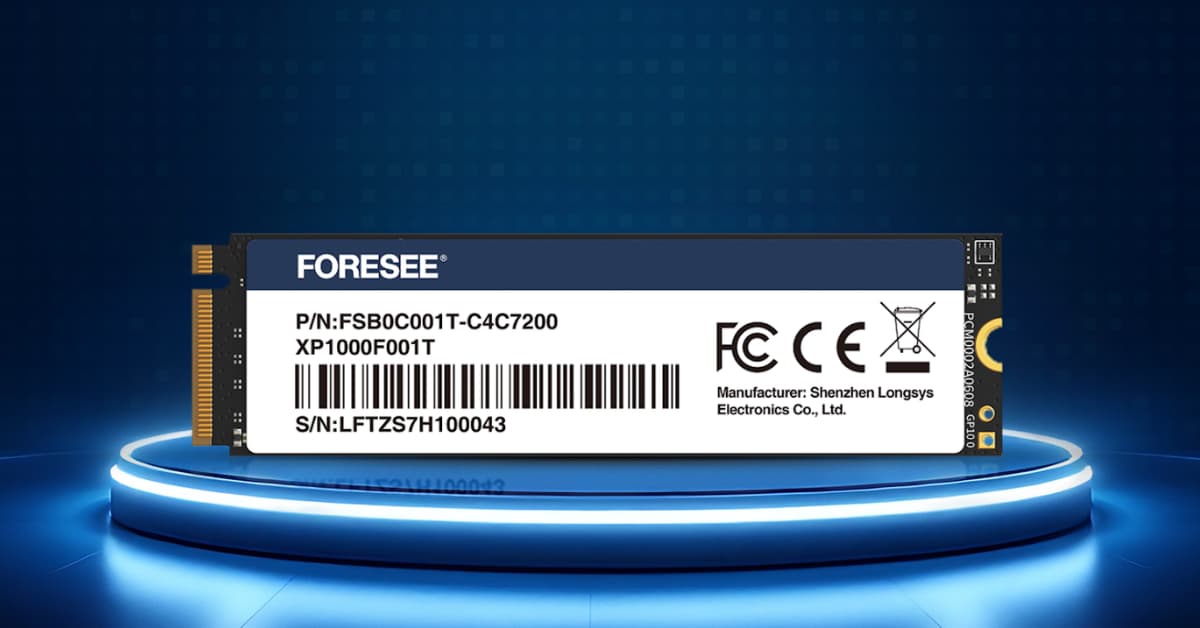
NVMe storage implements multiple form factors optimized for different integration requirements. M.2 represents the most common NVMe form factor, using compact PCB modules in various lengths. M.2 NVMe SSDs mount directly to the motherboard M.2 sockets via edge connector, eliminating cables and reducing PCB footprint.
However, M.2 thermal characteristics differ from 2.5-inch drives. The compact module without air gap requires direct thermal contact or heatsink attachment to manage heat dissipation, particularly important for automotive extended temperature operation.
U.2 (formerly SFF-8639) form factor packages NVMe in 2.5-inch housing similar to SATA SSDs but using a different connector that provides PCIe lanes plus power. U.2 combines NVMe performance with traditional 2.5-inch mechanical mounting and thermal characteristics. This form factor suits industrial applications migrating from SATA, where existing mounting hardware and thermal management remain viable. U.2 adoption in automotive remains limited due to connector cost and availability compared to M.2 integration.
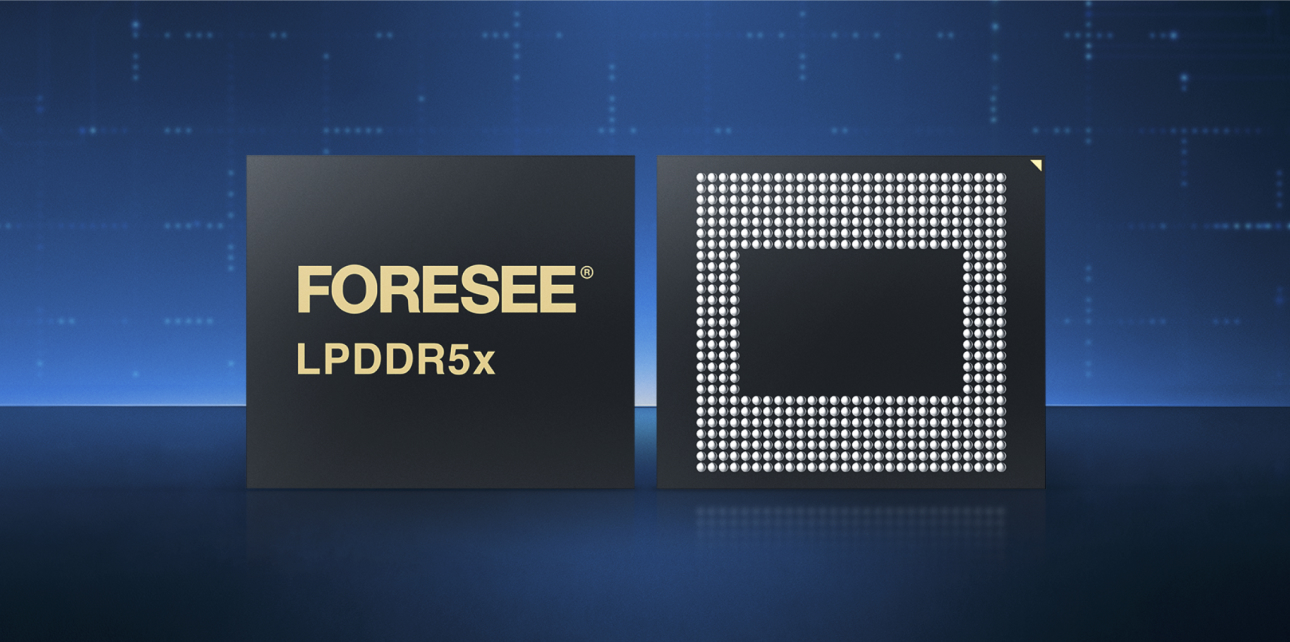
Ball grid array (BGA) NVMe modules provide the most compact integration by soldering the NAND controller and flash directly to the host PCB. BGA eliminates connectors entirely, thereby improving shock/vibration resistance and enabling integration in space-constrained automotive modules such as infotainment head units and ADAS compute platforms.
However, BGA sacrifices field serviceability. Storage capacity becomes fixed at manufacturing with no upgrade or replacement path. Automotive applications increasingly specify BGA NVMe for cost-optimized integration, where long-term component availability aligns with the vehicle production lifecycle.
Thermal Management for Automotive and Industrial Extended Temperature Operation
Thermal characteristics differ substantially between SATA and NVMe storage, which is critical when designing for automotive AEC-Q100 Grade 2 (-40°C to +105°C) or industrial extended-temperature (-40°C to +85°C) requirements.
SATA SSDs generate relatively modest heat during operation because the 600MB/s interface bandwidth limits power consumption to approximately 2-4 watts during active I/O operations. The 2.5-inch form factor with metal housing provides reasonable thermal mass and surface area for passive heat dissipation. Most industrial-grade SATA SSDs specify an operating temperature range of -40°C to +85°C, with additional thermal management beyond normal airflow. This simplified thermal design is suitable for industrial enclosures where active cooling may be unavailable, as well as for automotive installations in cabin environments.
NVMe drives consume more power during peak operation due to higher controller clock speeds, PCIe interface power requirements, and sustained bandwidth capabilities. PCIe 3.0 NVMe drives typically dissipate 4-7 W during active operation, whereas PCIe 4.0 implementations can reach 8-10 W at maximum throughput. M.2 NVMe modules concentrate this power dissipation in a compact PCB area without the thermal mass of 2.5-inch housings, which causes higher junction temperatures. Many consumer NVMe drives implement thermal throttling that reduces performance when the temperature exceeds 70°C to 80°C to prevent component damage. For automotive applications in which ambient temperature may reach 105°C, this throttling would severely degrade performance or cause system failures.
Industrial and automotive-qualified NVMe drives address thermal challenges through multiple approaches. Controller optimization reduces power consumption during typical workloads while maintaining peak performance capabilities for burst operations. Advanced thermal management includes integrated heatspreaders on M.2 modules, thermal interface pads for conducting heat to chassis or heatsink mounting, and firmware algorithms that balance performance against thermal limits. Some automotive NVMe modules specify maximum junction temperatures of 105°C to 125°C to maintain operation within AEC-Q100 Grade 2 ambient limits, with an appropriate thermal interface to the vehicle chassis or forced airflow.
System designers integrating NVMe into automotive or industrial platforms must allocate thermal budget during initial design rather than addressing thermal issues during qualification testing. This includes specifying NVMe modules qualified for extended-temperature operation, ensuring adequate thermal coupling between the SSD and the chassis or heatsink, and validating sustained performance under worst-case temperature conditions. The thermal management complexity represents one area where SATA maintains an advantage: simpler thermal requirements reduce integration engineering effort and qualification testing duration.
Power Consumption Characteristics and Battery-Powered Applications
SATA SSDs consume approximately 2 to 4 watts during active read/write operations and 0.5-1.5 watts during idle periods with the interface link active. Advanced SATA SSDs implement a device sleep (DevSleep) power state that reduces consumption to 2-5 milliwatts during extended idle by powering down interface logic and NAND controllers.
The transition from DevSleep to active operation requires 5 to 10 seconds, which is suitable for applications that access storage intermittently, with long idle periods between operations. Automotive telematics units or industrial data loggers that capture data periodically can leverage DevSleep to minimize power consumption between logging intervals.
NVMe power consumption varies widely with PCIe generation and performance level. However, NVMe defines sophisticated power-state management with multiple low-power modes that offer granular trade-offs between power consumption and resume latency. NVMe supports Autonomous Power State Transition (APST) that allows drives to enter deep low-power states automatically based on idle detection, with resume latencies ranging from microseconds for shallow states to milliseconds for deepest sleep modes.
The performance-per-watt metric often favors NVMe despite higher absolute power consumption. Because NVMe completes I/O operations faster than SATA, the drive can transition to low-power states sooner, thereby reducing total energy consumption during workload completion. For battery-powered applications with burst I/O patterns, NVMe’s higher peak power but faster completion time can actually extend battery life compared to SATA’s lower peak power but longer operation duration.
Industrial IoT edge devices powered by energy harvesting or battery backup must evaluate power consumption across the full duty cycle rather than relying solely on peak specifications. Applications with continuous write workloads are likely to find SATA’s lower sustained power more energy-efficient. Applications with intermittent high-bandwidth access patterns may benefit from NVMe’s ability to complete operations quickly and then enter deep low-power states.
Cost Analysis: Component Pricing and Total System Cost
The cost differential between SATA and NVMe storage has narrowed substantially as NVMe manufacturing volume has increased, but automotive and industrial applications must evaluate total system cost, including motherboard integration, qualification testing, and lifecycle management, rather than relying solely on per-gigabyte storage pricing.
SATA SSDs cost approximately $0.12 to $0.18 per GB for consumer-grade TLC-based products at common capacities (256GB through 1TB). Industrial-grade SATA SSDs with extended temperature ratings and enhanced endurance command $0.15 to $0.30 per GB, depending on NAND type and qualification level. NVMe SSDs have approached SATA pricing for consumer products, with PCIe 3.0 NVMe drives costing $0.12 to $0.20 per GB and PCIe 4.0 NVMe drives at $0.15 to $0.25 per GB. The price gap between SATA and NVMe at equivalent capacities has narrowed to 10%-30% in consumer markets, making interface choice more driven by system requirements than by storage cost.
Industrial- and automotive-qualified NVMe products command higher premiums due to their smaller production volumes and extensive qualification testing. Automotive-grade NVMe modules with AEC-Q100 certification cost up to 50% more than consumer equivalents at the same capacity. However, this premium reflects the same qualification overhead SATA SSDs require for automotive deployment. The relative cost difference between SATA and NVMe at industrial/automotive-grade levels remains similar to that in consumer products rather than expanding significantly.
Motherboard and system integration costs favor NVMe in modern designs. Current-generation processors and chipsets provide native PCIe lanes that connect directly to M.2 NVMe sockets without requiring additional controller chips. SATA interfaces now typically connect via a chipset with limited port counts (4 to 8 SATA ports), compared with the plentiful PCIe lanes (16 to 24 lanes on many platforms). This shift means that adding SATA ports may require external SATA controllers, which increase BOM cost, whereas NVMe connectivity leverages existing PCIe infrastructure. For new automotive or industrial platform designs, NVMe integration may actually cost less than SATA when accounting for the complete system BOM.
Long-term lifecycle considerations affect total cost differently for automotive versus industrial applications. Automotive programs requiring 10- to 15-year production runs must secure component-availability commitments, and both SATA and NVMe products face similar obsolescence challenges as NAND flash transitions to newer process nodes. However, NVMe is the focus of active development in the storage industry and may offer better long-term availability than SATA products as suppliers shift manufacturing capacity toward NVMe. Industrial applications with shorter product cycles (3 to 5 years) find both interfaces readily available with minimal lifecycle risk.
Application-Specific Interface Selection Guidelines
Choosing between SATA III and NVMe requires evaluating specific application requirements against interface capabilities rather than defaulting to either technology based on familiarity or cost assumptions.
SATA III Remains Optimal For:
- Moderate Bandwidth Applications: Systems requiring sustained throughput up to 500MB/s, where SATA provides sufficient bandwidth without the thermal or power overhead of NVMe
- Legacy Platform Integration: Retrofit designs or platform refreshes where existing 2.5-inch mounting, SATA controllers, and thermal management remain viable
- Simplified Thermal Management: Passively-cooled industrial enclosures or automotive installations where limited airflow makes NVMe thermal management challenging
- Minimum Power Consumption: Battery-powered devices with continuous low-bandwidth access patterns, where SATA’s lower sustained power consumption extends battery life
- Cost-Optimized High Capacity: Archive or backup storage requiring multi-terabyte capacity, where per-gigabyte cost drives selection and bandwidth requirements remain modest
NVMe Delivers Superior Value For:
- High-Bandwidth Data Capture: Automotive sensor fusion platforms, industrial machine vision systems, or surveillance recorders where multiple high-resolution streams exceed SATA throughput
- Low-Latency Applications: Real-time industrial control systems, automotive safety functions, or edge AI inference platforms where reduced access latency impacts system responsiveness
- Multi-Threaded Workloads: Virtualized industrial controllers, container-based edge computing platforms, or automotive infotainment running multiple concurrent applications
- Compact Integration: Space-constrained automotive modules, embedded industrial computers, or portable diagnostic equipment where M.2 or BGA form factors optimize PCB utilization
- Future Platform Scaling: New platform designs with multi-year production, where NVMe provides performance headroom as application requirements evolve
Lexar Enterprise Storage Solutions for NVMe and SATA Applications
Lexar Enterprise delivers both NVMe and SATA storage solutions engineered specifically for automotive, industrial, and embedded applications requiring proven reliability across extended operating conditions. The portfolio spans multiple form factors, interface types, and qualification levels to match diverse system integration requirements.
Lexar Enterprise NVMe solutions include M.2 modules and BGA packages supporting PCIe 3.0 and 4.0 with automotive-grade temperature ratings and qualification testing. Products intended for automotive applications undergo AEC-Q100 qualification at Grade 2 (-40°C to +105°C) or Grade 3 (-40°C to +85°C), depending on the intended mounting location. Industrial NVMe products provide extended-temperature operation and enhanced shock/vibration resistance for manufacturing automation, transportation systems, and harsh-environment installations.
Engineering support infrastructure includes thermal modeling assistance, performance validation testing, and integration consultation that helps automotive OEM teams and industrial designers match storage interface selection to specific application requirements. This technical engagement identifies where NVMe’s performance advantages justify the integration complexity, and where SATA delivers optimal total system cost and reliability.
Conclusion: Interface Selection Based on System Requirements
While NVMe delivers 4x-10x bandwidth improvement and substantially reduced latency compared to SATA III, the optimal interface selection depends on matching specific application requirements against the capabilities and constraints each technology presents.
SATA III continues to provide value for embedded applications in which 600MB/s bandwidth suffices, where simplified thermal management and lower sustained power consumption are more important than peak performance, or where 2.5-inch form-factor integration leverages existing mechanical mounting and thermal interfaces. Industrial data loggers with moderate write rates, automotive infotainment systems with standard storage requirements, or cost-optimized edge devices running sequential workloads often find that SATA delivers adequate performance without the thermal and integration complexity NVMe requires.
NVMe enhances system capabilities for applications that are bottlenecked by storage bandwidth or latency. Automotive ADAS platforms processing multiple high-resolution camera streams, industrial machine vision systems capturing and analyzing inspection images in real-time, or edge AI inference platforms where model loading speed affects throughput, all benefit directly from NVMe’s 2,000-7,000 MB/s sequential performance and sub-100 microsecond latency. The parallel command processing architecture enables multi-threaded applications and virtualized environments to achieve storage performance that matches multi-core processor capabilities rather than imposing single-queue bottlenecks.
Thermal management represents the primary integration challenge when transitioning from SATA to NVMe in automotive and industrial environments. While SATA SSDs operate reliably across extended temperature ranges with passive cooling, NVMe requires deliberate thermal design, including heatsink attachment, thermal interface materials, and validation of sustained performance at temperature extremes. Automotive applications targeting AEC-Q100 Grade 2 operation must specify NVMe modules qualified for 105°C ambient and implement thermal solutions that maintain junction temperature within specification during sustained operation.
Lexar Enterprise storage solutions support both NVMe and SATA interfaces, with automotive qualification, industrial temperature ratings, and long-term availability commitments, enabling system designers to optimize interface selection for specific application requirements. The combination of technical performance data, thermal management consultation, and lifecycle support helps automotive OEM engineers and industrial designers implement storage architectures that balance bandwidth capabilities, integration complexity, and total system cost across extended product lifespans.