
Power consumption for embedded storage varies widely depending on the interface architecture, controller complexity, and NAND configuration. Edge applications must evaluate power draw across multiple operational states rather than relying on typical active power specifications that ignore idle periods, sleep modes, and transition behaviors that dominate actual energy consumption in intermittent-access edge workloads.
Active power consumption during read and write operations is highest, but often accounts for only a small fraction of total operational time in edge devices. Industrial sensors that log data every 30 seconds, automotive telematics units that capture diagnostic snapshots during key events, or surveillance systems that trigger recording based on motion detection spend most of their operational hours in idle or low-power states, where interface architecture and power management capabilities determine actual energy consumption more than peak-performance specifications.
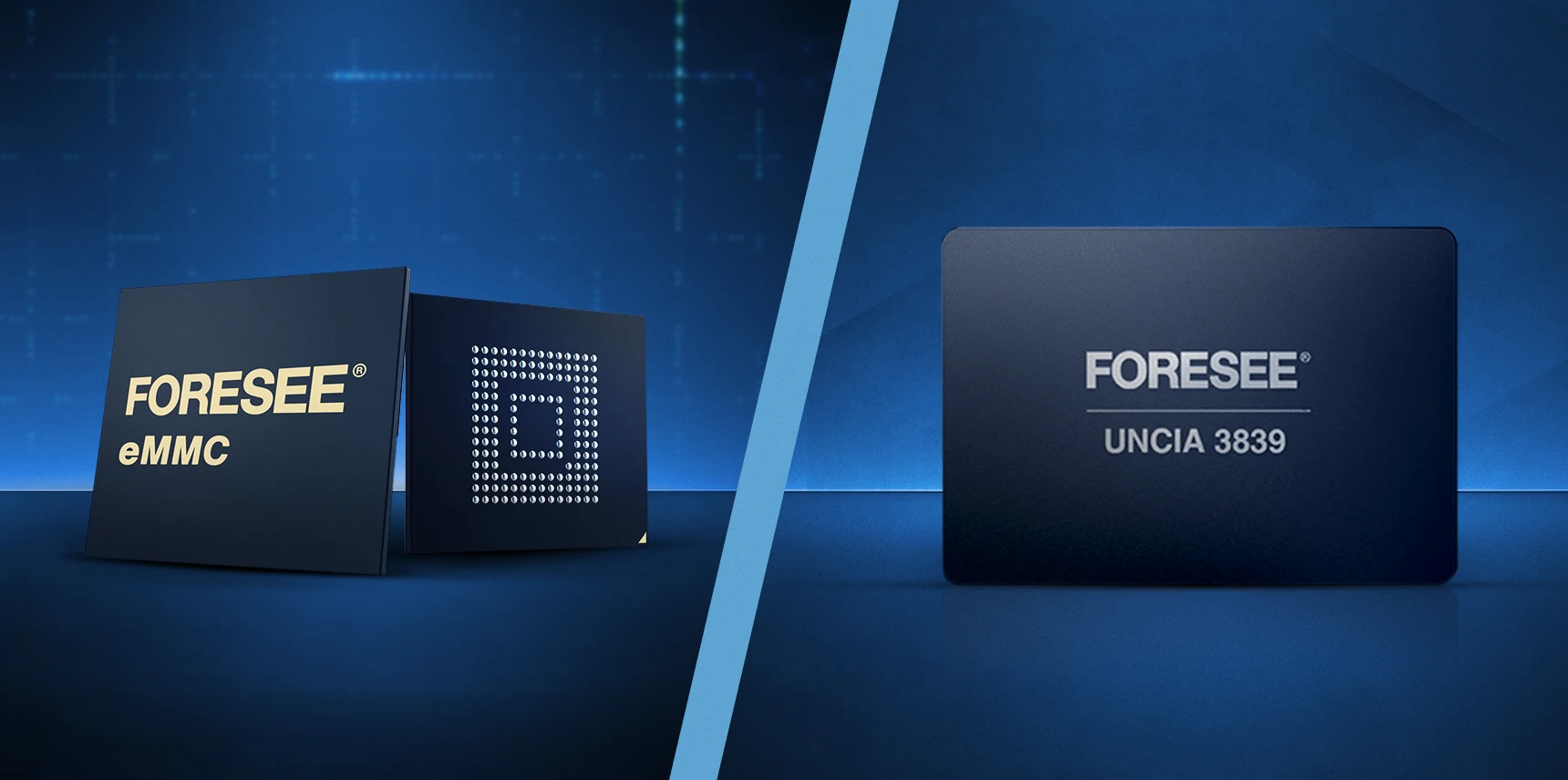
Embedded MultiMediaCard (eMMC) storage delivers the lowest power consumption profile among embedded storage technologies due to simplified controller architecture and parallel interface operation. Active read power typically ranges from 0.5 to 1.5 watts, depending on capacity and NAND type, while active write consumes 0.8 to 2.0 watts. The parallel 8-bit interface operates at lower clock frequencies than high-speed serial interfaces, reducing controller power requirements.
More importantly, eMMC implementations support aggressive power states, including the device sleep mode to reduce consumption to 2 to 5 milliwatts during extended idle periods. This deep-sleep capability makes eMMC optimal for battery-powered edge devices with sporadic access patterns, where minimizing idle power consumption extends the operational lifetime between charging cycles.
Universal flash storage (UFS) uses a higher-performance serial interface architecture with full-duplex operation, enabling simultaneous read and write operations. This architectural sophistication increases controller complexity and power requirements compared to eMMC. UFS 2.1 devices typically consume 1.5 to 2.5 watts during active read operations and 2.0 to 3.5 watts during write operations.
However, UFS completes I/O operations faster than eMMC due to its higher bandwidth, allowing the controller to transition to low-power states sooner. UFS defines multiple power modes, including Deep Sleep, which reduces consumption to 5 to 10 milliwatts, and adaptive voltage scaling that dynamically adjusts power based on workload intensity.
For edge AI applications that burst high-bandwidth data transfers, then idle, UFS’s ability to complete operations quickly and enter deep sleep can reduce total energy per transaction compared with eMMC, despite its higher peak power.
SATA SSDs in 2.5-inch or M.2 form factors consume 2-4 watts during active operations, depending on controller architecture and NAND configuration. The SATA interface’s 600MB/s bandwidth limit keeps power requirements moderate compared with high-speed NVMe, but SATA lacks the sophisticated power management used in embedded storage technologies.
SATA device sleep (DevSleep) can reduce power consumption to 2 to 5 milliwatts, similar to eMMC, but DevSleep transitions and resume times range from 5 to 10 seconds, making this mode unsuitable for applications requiring rapid wake from deep sleep. Industrial edge gateways with predictable periodic access patterns can leverage DevSleep effectively, while applications with unpredictable access timing may keep SATA interfaces in higher power idle states that consume 0.5-1.5 watts continuously.
NVMe SSDs deliver the highest performance but also the highest power consumption across all operational states. Entry-level PCIe 3.0 NVMe drives consume 3 to 5 watts during active operations, while high-performance PCIe 4.0 implementations reach 7 to 10 watts when sustaining maximum bandwidth.
The PCIe interface itself requires continuous power to maintain link state, which increases idle power by 1 to 3 watts compared to eMMC or UFS’s sub-100-milliwatt idle power. NVMe defines Autonomous Power State Transition (APST), which enables automatic entry into multiple low-power states with varying resume latencies; however, even the deepest NVMe sleep states typically consume 5x to 10x more power than eMMC Device Sleep.
For edge computing platforms with continuous or frequent storage access where performance justifies power budget allocation, NVMe delivers optimal throughput per watt during active periods. For battery-powered or energy-constrained edge devices with intermittent access, NVMe’s elevated idle and active power consumption may exhaust the power budget.
Power Consumption Summary by Storage Type
- eMMC Active Power: 0.5 to 2.0 watts (read/write), lowest active consumption for embedded storage
- eMMC Sleep Power: 2 to 5 milliwatts in device sleep mode, optimal for battery-powered intermittent access
- UFS Active Power: 1.5 to 3.5 watts (read/write), moderate consumption with fast transaction completion
- UFS Sleep Power: 5 to 10 milliwatts in deep sleep, includes adaptive voltage scaling for workload optimization
- SATA SSD Active Power: 2 to 4 watts, moderate consumption limited by 600MB/s interface bandwidth
- SATA SSD Sleep Power: 2 to 5 milliwatts in DevSleep (5 to 10 second resume time), 0.5 to 1.5 watts in normal idle
- NVMe Active Power: 3 to 10 watts, depending on PCIe generation and performance level
- NVMe Sleep Power: 10 to 50 milliwatts in deep sleep states, 1 to 3 watts in normal idle with PCIe link active
Form Factor Considerations: Integration and Thermal Management
Storage form factor selection affects power consumption indirectly through thermal characteristics, mechanical integration requirements, and system-level power delivery architecture. Edge computing platforms with constrained enclosure volume, passive cooling, or harsh environmental conditions must account for form factor thermal properties when evaluating power-conscious storage options.
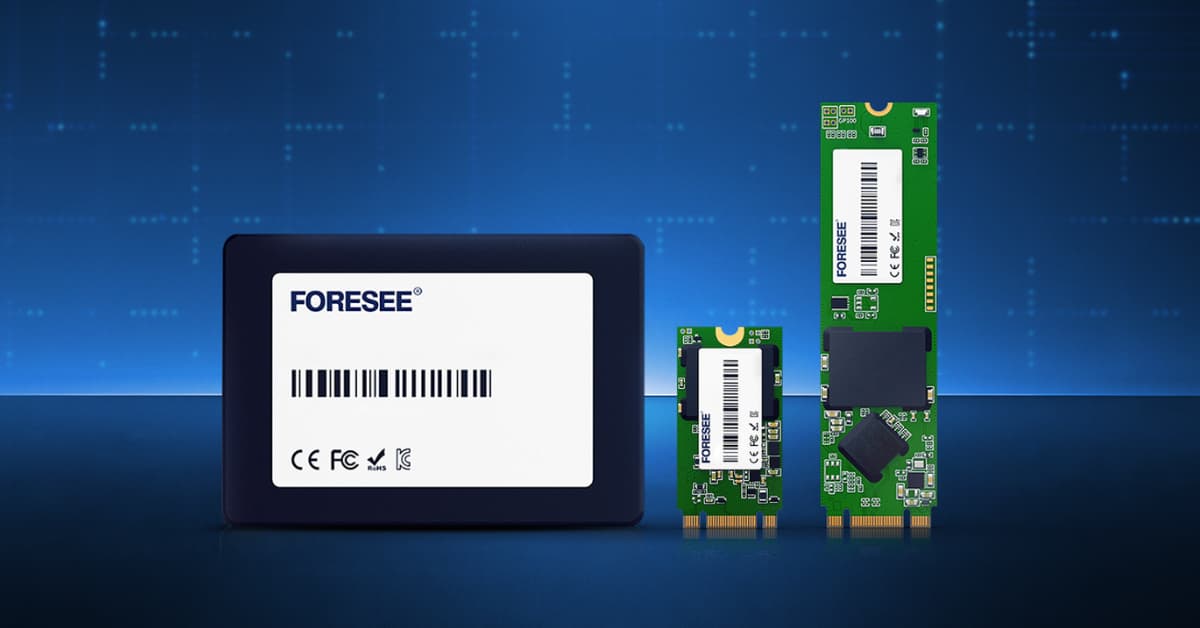
Ball grid array (BGA) packages represent the most compact embedded storage implementation, soldering a NAND controller and flash memory directly to the host PCB.
eMMC and UFS predominantly use BGA packaging in sizes ranging from 11.5x13mm to 14x18mm, enabling integration into space-constrained automotive modules, compact industrial controllers, and handheld edge devices.
BGA mounting eliminates connectors that consume PCB real estate and introduce potential mechanical failure points from shock or vibration. However, BGA packages rely on PCB thermal dissipation rather than housing-based heat spreading, which requires deliberate thermal design, including thermal vias, copper pours, or contact with enclosure surfaces.
For eMMC with a typical power dissipation of < 2W, standard PCB construction is sufficient for thermal management. UFS and higher-power embedded storage may require enhanced thermal coupling to prevent a rise in junction temperature in passively cooled edge platforms.
M.2 form factor packages NVMe or SATA storage on compact PCB modules using edge connector integration. M.2 modules come in various lengths (2230, 2242, 2260, 2280, 22110) with standardized 22mm width and single or double-sided component mounting. M.2 enables field-replaceable storage in edge computing platforms where capacity upgrades or maintenance access matter, unlike permanently-mounted BGA implementations.
Edge connector mounting eliminates cables while providing thermal contact to the host PCB, though M.2 modules concentrate power dissipation in compact areas without the thermal mass of 2.5-inch housings. Low-power M.2 SATA modules that dissipate 2-4 W operate reliably with passive cooling in most industrial environments. High-performance M.2 NVMe modules dissipating 5-10 watts require thermal management, including heatsinks, thermal pads, or active airflow to prevent thermal throttling that degrades performance when junction temperature exceeds 70°C to 80°C.
The 2.5-inch SSD form factor offers the largest thermal mass and surface area for heat dissipation through its metal housing. The standardized 100mm x 70mm footprint, with a 7mm or 9mm height, enables mounting in industrial chassis with established mechanical interfaces and thermal contact with enclosure surfaces.
For industrial edge servers, gateways, or embedded PCs that require sustained storage performance at elevated ambient temperatures, 2.5-inch SATA SSDs deliver reliable operation without requiring additional thermal management.
The cable-based connection (SATA data and power) adds flexibility for drive positioning but consumes connector resources and complicates cable routing in compact enclosures. Power delivery through dedicated power cables rather than PCB traces reduces PCB current-carrying requirements compared to M.2 implementations.
The mini-SATA (mSATA) form factor provides a SATA interface in a compact module similar to M.2, but using a different connector standard. mSATA is largely superseded by M.2 in new designs, though legacy industrial platforms may still specify mSATA to maintain compatibility with existing form factors. Power and thermal characteristics match those of M.2 SATA implementations, with a similar footprint and connector-mounting approach.
Temperature Range Requirements for Automotive and Industrial Edge Deployments
Extended operating temperature capability separates industrial and automotive storage products from consumer-grade implementations. Edge deployments in vehicle interiors, outdoor industrial enclosures, or factory floors without climate control require storage that maintains specification-compliant operation across temperature extremes while managing the thermal challenges posed by power consumption.
Consumer-grade storage products typically specify a 0°C to 70°C operating range, which excludes deployment in automotive applications subject to -40°C cold start in winter climates or +85°C sustained cabin temperature in summer sun exposure. Industrial environments, including outdoor equipment enclosures, manufacturing facilities with thermal processes, or transportation applications, similarly exceed consumer temperature ratings.
Specifying storage for extended-temperature operation requires matching the product temperature grade to the actual deployment environment, rather than assuming all “industrial” products offer equivalent thermal capabilities.
Industrial-grade storage extends the operating range to -40°C to +85°C, covering harsh-environment deployments, including outdoor installations, unheated equipment shelters, and factory-floor locations near thermal processes. This temperature range accommodates most industrial Internet of Things (IoT) gateways, manufacturing automation controllers, and transportation telematics units.
Storage products qualified for industrial temperature undergo component screening to ensure NAND flash cells, controller ICs, and passive components maintain electrical specifications across the full temperature range. eMMC and SATA SSDs with industrial temperature ratings provide reliable operation for edge applications in factories, outdoor infrastructure, or commercial vehicle installations.
Automotive-grade storage requires even more stringent temperature qualification matching AEC-Q100 automotive electronics standards. Grade 3 (-40°C to +85°C) covers in-cabin automotive applications, including infotainment systems, instrument clusters, and telematics control units. Grade 2 (-40°C to +105°C) supports under-hood or powertrain-adjacent installations where sustained elevated temperature exceeds Grade 3 limits.
Achieving automotive temperature qualification requires extensive thermal cycling testing, high-temperature operating life validation, and temperature-dependent failure rate characterization that consumer products never undergo. The qualification cost and specialized NAND binning for automotive temperature tolerance explain the price premium that automotive-qualified storage commands over consumer products.
Power consumption directly impacts thermal management requirements at elevated operating temperatures. Storage dissipating 2 W at 25°C ambient temperature generates a modest temperature rise under passive cooling. The same 2-watt dissipation at 85°C ambient pushes the junction temperature toward the maximum rating unless thermal coupling to the heatsink or chassis provides adequate thermal resistance.
NVMe drives dissipating 7 to 10 watts face severe thermal challenges at automotive or industrial temperature limits, often requiring forced airflow or liquid cooling that adds system cost and complexity. The power-thermal interaction makes eMMC and low-power SATA implementations attractive for passively cooled industrial edge platforms, where elevated ambient temperatures and power dissipation would otherwise exceed the thermal budget.
Temperature Grade Selection Guidelines
- Consumer Grade (0°C to 70°C): Indoor edge computing, climate-controlled data centers, office environments only
- Industrial Grade (-40°C to +85°C): Outdoor equipment, factory floor installations, commercial vehicles, unheated shelters
- Automotive Grade 3 (-40°C to +85°C): In-cabin automotive systems, infotainment, instrument clusters, passenger compartment TCUs
- Automotive Grade 2 (-40°C to +105°C): Under-hood installations, engine control modules, powertrain electronics, exhaust-adjacent sensors
- Automotive Grade 1 (-40°C to +125°C): High-temperature automotive applications, exhaust sensors, transmission controllers (rare for storage)
Endurance Ratings and Operational Lifetime Implications
Power-conscious storage selection must balance write endurance requirements against the power-consumption trade-offs inherent to different NAND types, as higher-endurance NAND technologies often consume more power during write operations.
Program/erase cycle ratings specify how many times NAND cells can reliably undergo write operations before wear-out degrades data retention and increases error rates. SLC NAND delivers 50,000 to 100,000 P/E cycles with the lowest power consumption per write operation due to simple two-voltage-state programming.
pseudo-SLC (pSLC) operating MLC or TLC NAND in single-bit mode achieves 20,000 to 40,000 cycles. MLC NAND provides 3,000 to 10,000 cycles. TLC NAND delivers 1,000 to 3,000 cycles. QLC NAND offers 150-1,000 cycles at the lowest cost per gigabyte, but requires the highest power due to complex voltage-state programming.
Industrial IoT sensors logging data every 30 seconds generate approximately 2880 write operations per 24-hour period. Over a 10-year deployment (3650 days), this accumulates to 10.5 million write operations. With wear leveling distributing writes across capacity, a 32GB device experiences approximately 328 full-device writes over a decade.
TLC NAND rated for 3000 P/E cycles consumes 11% of rated endurance, providing adequate margin. MLC or pSLC rated for 10,000+ cycles uses less than 3% of its endurance, offering a conservative design margin but potentially consuming more power per write operation due to differences in NAND architecture.
The power-endurance tradeoff becomes critical for battery-powered edge devices where both write power consumption and operational lifetime matter. SLC and pSLC deliver the highest endurance with moderate write power, making them optimal for industrial data loggers and automotive event recorders that operate under continuous write workloads and power constraints. TLC provides adequate endurance for moderate write-frequency applications while consuming less write power than SLC in some implementations, thanks to controller optimization and 3D NAND efficiency improvements.
Applications must calculate actual write frequency and total lifetime writes to determine the minimum acceptable endurance rating, then select the NAND type that meets the endurance requirement while optimizing power consumption.
Terabytes written (TBW) specifications provide another endurance metric indicating total data volume the storage device can write over its lifetime. A 256GB SSD rated for 150 TBW can write 150 terabytes total before reaching the endurance limit.
For edge applications with predictable write patterns, TBW ratings enable direct calculation of expected operational lifetime. Writing 50 GB per day to an industrial edge gateway exhausts the 150 TBW rating in approximately 8 years. Automotive telematics units that write 500MB per day depletes 150TBW in 821 years, indicating endurance far exceeds other failure mechanisms.
The TBW metric helps engineers avoid over-specifying endurance (and potentially sacrificing power efficiency) for applications where write frequency doesn’t approach endurance limits.
Storage Selection Framework for Power-Conscious Edge Applications
Optimizing storage selection for edge applications requires a systematic evaluation of power budget constraints, performance requirements, environmental conditions, and deployment-specific endurance needs, rather than applying generic “best practice” recommendations.
Battery-Powered or Solar-Harvested Edge Devices
Applications operating on battery power or energy harvesting, where the total energy budget determines operational lifetime between charging cycles, prioritize minimizing both active and idle power consumption.
Industrial wireless sensors, remote monitoring stations, or portable diagnostic equipment benefit from eMMC’s 0.5W to 2W active power and 2mW to 5mW device sleep capability. The slower sequential throughput (400MB/s for eMMC 5.1) becomes acceptable when write operations occur infrequently and transaction completion time matters less than extending battery runtime.
UFS provides alternatives for battery-powered applications that require higher burst bandwidth—the ability to complete transactions 3x to 6x faster than eMMC —enabling a quicker transition to deep sleep and potentially consuming less total energy per transaction despite higher instantaneous power draw.
Vehicle-Powered Automotive Edge Computing
Automotive telematics units, advanced driver assistance systems (ADAS) data-logging platforms, and infotainment systems operate on vehicle 12V power systems but must minimize power draw during engine-off periods to avoid battery drain during extended parking.
eMMC and UFS embedded storage provide optimal solutions. Low idle power consumption (sub-100 mW) prevents battery drain during vehicle-off periods, while automotive-qualified temperature ratings (-40°C to +105°C, Grade 2) handle in-cabin thermal extremes. BGA form-factor integration enables compact module construction that is resistant to vehicle vibration.
For applications requiring sustained high bandwidth like multi-camera ADAS recording, automotive-qualified NVMe in BGA or M.2 form factor handles data rates eMMC cannot achieve, accepting higher power consumption (3-7W active) as a reasonable tradeoff given continuous availability of vehicle power during operation.
Industrial Edge Gateways and Field Controllers
Industrial IoT gateways that aggregate sensor data from manufacturing equipment or run inference models at factory locations typically operate on mains power but must manage the thermal budget in passively cooled enclosures.
M.2 SATA SSDs or 2.5-inch industrial SATA drives provide a balance of adequate performance (550MB/s), moderate power consumption (2W to 4W active), and thermal characteristics manageable through passive cooling in industrial temperature environments (-40°C to +85°C).
Applications requiring NVMe bandwidth for real-time video analytics or high-frequency data aggregation must implement thermal management, including heatsinks, thermal interface materials, or forced airflow, to handle 5-10W of power dissipation at elevated ambient temperatures.
Outdoor Infrastructure and Environmental Monitoring
Edge devices deployed in outdoor infrastructure, including traffic monitoring, environmental sensing, or utility metering, require extended temperature operation (-40°C to +85°C, industrial-grade), ruggedized mechanical integration, and power efficiency to support battery backup during mains power loss.
Industrial-grade eMMC or industrial M.2 SATA SSDs with a conformal coating and extended-temperature qualification ensure reliable operation. BGA eMMC integration eliminates connector exposure to moisture ingress and vibration stress. The lower power consumption (1W to 3W typical) allows reasonable battery backup runtime to maintain operation during utility power interruptions common in outdoor installations.
Edge AI Inference and Video Analytics
Edge computing platforms that run AI inference models or real-time video analytics require storage bandwidth to enable rapid model loading and continuous capture of video streams. NVMe SSDs in M.2 or 2.5-inch form factors deliver bandwidth (2000MB/s to 7000MB/s) necessary for multi-stream 4K video recording or rapid deployment of updated inference models.
The higher power consumption (5W to 10W for PCIe 4.0 NVMe) becomes acceptable in mains-powered installations where performance bottlenecks at the storage interface-level would limit system capabilities. Thermal management through heatsink attachment or chassis thermal coupling maintains sustained performance without throttling in continuous operation scenarios.
Lexar Enterprise Storage Solutions for Power-Conscious Edge Applications
Lexar Enterprise delivers embedded storage and SSD solutions engineered for power-conscious edge computing deployments across automotive, industrial IoT, and infrastructure monitoring applications. The portfolio spans eMMC, UFS, SATA SSD, and NVMe implementations with power consumption profiles, temperature ratings, and endurance specifications matched to specific edge deployment requirements.
Lexar Enterprise eMMC solutions provide the lowest-power embedded storage option for battery-powered edge devices and energy-constrained industrial IoT platforms. Products support eMMC 5.1 specifications, delivering 400MB/s interface bandwidth while maintaining sub-2W active power consumption and 2mW to 5mW device sleep power states.
Industrial-grade eMMC modules qualified for -40°C to +85°C operation enable deployment in harsh environments, including outdoor installations, factory floors, and commercial vehicle applications. Automotive-grade eMMC products meeting AEC-Q100 qualification support in-cabin automotive systems, including telematics control units, infotainment platforms, and instrument clusters requiring extended temperature operation with minimal power draw.
UFS embedded storage offers a higher-performance alternative for edge applications that require bandwidth beyond eMMC capabilities, while maintaining power efficiency superior to NVMe or SATA implementations. UFS 2.1 and 3.1 products deliver bandwidths of 600MB/s to 2400MB/s, enabling rapid data transfer for edge AI platforms, automotive data loggers, and industrial vision systems. Power consumption remains moderate (2W to 3.5W active), with sophisticated power management, including deep sleep and adaptive voltage scaling, that optimizes energy consumption across varying workload intensities.
Industrial SATA SSDs in M.2 and 2.5-inch form factors serve edge gateways, industrial PCs, and embedded computing platforms that require field-serviceable storage with proven interface technology and thermal characteristics suitable for passively cooled enclosures. Power consumption (2W to 4W active) enables operation across industrial temperature ranges (-40°C to +85°C) with standard PCB thermal management or chassis thermal coupling. Extended lifecycle commitments ensure component availability throughout multi-year industrial equipment production runs.
NVMe solutions address edge computing applications in which storage bandwidth directly limits system capabilities, including multi-channel video surveillance, edge AI training, and high-frequency industrial data acquisition. M.2 NVMe modules support PCIe 3.0 and 4.0 with automotive temperature ratings for ADAS platforms and in-vehicle computing applications. Thermal optimization through controller selection and NAND configuration balances performance requirements against thermal budget constraints in space-limited automotive modules.
Conclusion: Optimizing Storage Selection for Edge Power Budgets
Power-conscious storage selection for edge computing applications requires a systematic evaluation of power consumption across operational states, form-factor thermal characteristics, temperature-rating alignment with the deployment environment, and endurance specifications matched to actual write-workload patterns. The optimal storage choice balances performance capabilities against power-constrained requirements specific to each edge application, rather than selecting the highest-performance technology regardless of power implications.
eMMC embedded storage delivers the lowest total power consumption profile (0.5W to 2W active, 2mW to 5mW deep sleep), making it optimal for battery-powered industrial sensors, solar-harvested monitoring stations, or automotive telematics units requiring minimal power draw during vehicle-off periods.
The 400MB/s bandwidth limitation becomes acceptable for applications with moderate sequential transfer requirements where extending battery runtime between charging cycles outweighs performance optimization. Industrial and automotive-grade eMMC products qualified for -40°C to +85°C or -40°C to +105°C operation enable deployment in harsh environments that exceed consumer storage temperature specifications.
UFS provides a performance-power balance for edge applications that require bandwidth beyond eMMC capabilities (600MB/s to 2400MB/s) while maintaining active power consumption (1.5W to 3.5W) substantially lower than NVMe implementations. The full-duplex serial interface and command queuing enable efficient transaction processing, reducing total energy per operation compared to eMMC despite higher instantaneous power draw.
Edge AI platforms, automotive ADAS data loggers, or industrial vision systems benefit from UFS bandwidth while staying within moderate power budgets.
SATA SSDs serve industrial edge gateways and embedded computing platforms that require field-serviceable storage, with established interface technology and thermal management approaches proven across industrial temperature ranges.
Bandwidth of 550MB/s to 600MB/s suffices for edge database applications, industrial HMI systems, and manufacturing execution platforms. Moderate power consumption (2W to 4W) enables passive thermal management in standard industrial enclosures with -40°C to +85°C ambient temperature operation.
NVMe delivers maximum bandwidth (2000MB/s to 7000MB/s) for edge computing applications where the storage interface becomes a system bottleneck, including multi-stream video analytics, edge AI model training, and high-frequency data acquisition platforms. The elevated power consumption (5W to 10W for PCIe 4.0) requires active thermal management in many edge deployments but provides performance capabilities unattainable with lower-power storage technologies.
Mains-powered industrial edge servers or vehicle-powered automotive computing platforms with adequate thermal budget can leverage NVMe performance where bandwidth requirements justify power allocation.
Endurance specifications must align with actual write-workload patterns to avoid over-specifying high-endurance NAND, which may compromise power efficiency or cost optimization. Applications that write continuously throughout the operational lifetime require MLC, pSLC, or SLC NAND with 10,000+ P/E cycles. Applications with intermittent or moderate write frequency can leverage TLC NAND with 1000-3000 cycles, accepting lower endurance in exchange for lower cost per gigabyte or optimized power consumption in some implementations.Lexar Enterprise embedded storage and SSD solutions provide edge computing designers with storage options spanning the power-consumption spectrum, from ultra-low-power eMMC to performance-optimized NVMe. The combination of automotive and industrial temperature qualification, power profile documentation across operational states, and engineering consulting enables system architects to optimize storage selection for specific edge-application power budgets while ensuring reliable operation across extended temperature ranges and harsh environmental conditions throughout multi-year deployment lifetimes.