
When factory automation systems fail, memory-related issues account for a disproportionate number of unplanned maintenance events. Harsh industrial environments — with temperature swings from -40°C to +105°C, electromagnetic interference, and constant vibration — create conditions that destroy conventional storage within months.
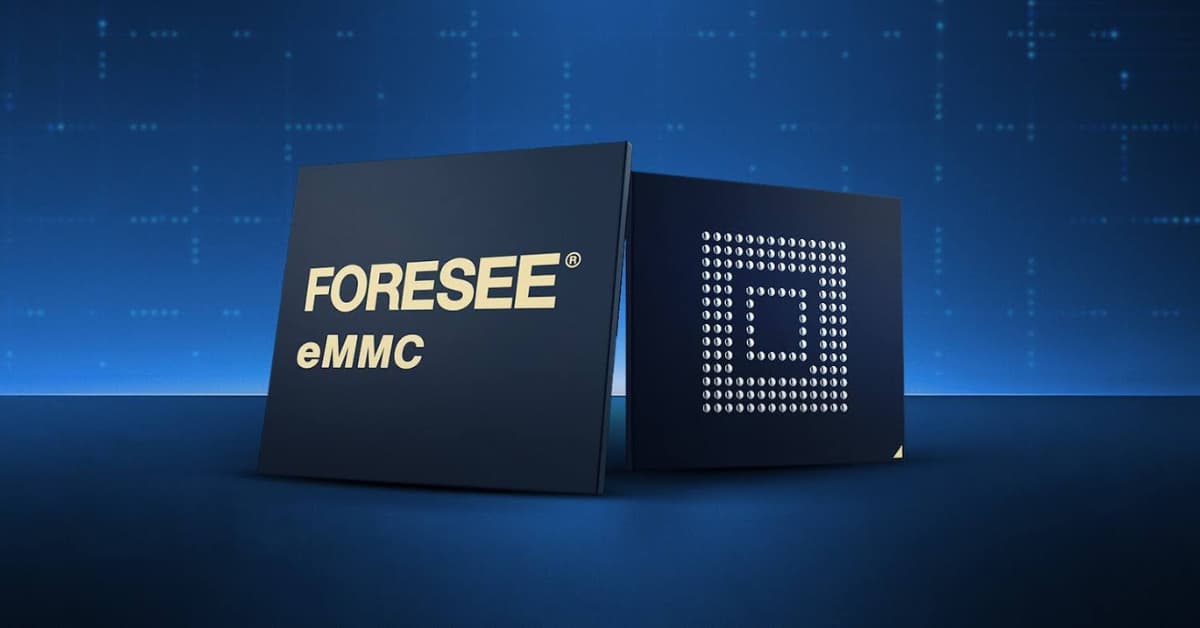
Embedded multi-media card (eMMC) Flash memory has a small form factor, low power consumption, and fast read/write speeds, making it a good choice for storing firmware, configuration files, and other essential data in robotic controllers. However, not all eMMC solutions deliver the industrial-grade specifications your automation systems require.
The Challenges of Smart Manufacturing Environments
The fundamental challenge lies in the performance gap between consumer electronics and industrial requirements. Industrial automation introduces artificial intelligence (AI), internet of things (IoT), and robotics innovations that require systems capable of handling complex datasets while maintaining reliability under extreme operating conditions.
When memory systems fail in automation environments:
- Robotic control systems lose calibration data, requiring costly recalibration procedures
- Machine learning algorithms trained for specific tasks become corrupted, leading to quality control failures
- Safety protocols stored in memory become inaccessible, triggering emergency shutdowns
- Predictive maintenance data gets lost, eliminating the ability to prevent equipment failures
The shift to Industry 4.0, which is characterized by the application of IoT and cloud computing in industrial processes, is driving the market demand for reliable and durable storage solutions.
The Memory Technologies Powering Next-Generation Automation
Industrial automation systems rely on three primary embedded storage technologies, each serving specific functions within the broader automation ecosystem. Based on Lexar Enterprise’s experience working with automation engineers across multiple industries, we’ve identified each technology’s key applications and advantages.
eMMC: The Reliable Workhorse for Control Systems
eMMC technology has existed for a long time, allowing vendors to perfect the yield on underlying memory, making it a relatively cost-effective option for on-device memory storage. Through our work with industrial clients, we’ve found that eMMC serves as the primary storage for:
- Robot firmware and operating systems – Providing stable boot sequences and core functionality
- Configuration files and calibration data – Maintaining precise operational parameters
- Safety protocols and emergency procedures – Ensuring immediate access to critical safety information
- Local data logging and event storage – Recording operational history for analysis and compliance
The key advantage of industrial-grade eMMC lies in its extended temperature operating range and built-in error correction capabilities. We’ve engineered our industrial memory cards to use dynamic and static wear-leveling algorithms that distribute data evenly across memory cells, extending their operational lifespan and maintaining consistent performance.
UFS: High-Performance Storage for AI-Driven Automation
Universal flash storage (UFS) provides several advantages over traditional storage solutions, such as eMMC, including superior capacity, bandwidth, low-power operation, reliability, and security. In our experience with advanced automation scenarios, UFS becomes essential for:
- Real-time AI processing – Supporting machine learning algorithms that adapt to changing production conditions
- Computer vision applications – Handling high-resolution image processing for quality control and object recognition
- Predictive maintenance algorithms – Processing sensor data to predict equipment failures before they occur
- Complex motion control – Managing sophisticated robotic movements requiring precise timing
The UFS 3.1 standard can read data at speeds close to 2000MB/s, significantly reducing boot time and loading time for various applications, contributing to faster system response times.
Industrial Memory Cards: Expandable Storage for Data-Intensive Operations
We’ve seen that memory cards store data for robotics, process control systems, and human-machine interfaces (HMIs) in factories and industrial facilities. These solutions provide:
- Scalable data storage – Allowing systems to expand capacity as data requirements grow
- Hot-swappable archives – Enabling data collection without system downtime
- Backup and redundancy – Providing fail-safe storage for critical operational data
- Field-replaceable storage – Supporting maintenance procedures in remote locations
Critical Memory Selection Factors for Automation Success
Your memory selection directly impacts automation system reliability, performance, and total cost of ownership. Through our extensive work with automation engineers, we’ve identified these essential factors:
Temperature Performance and Environmental Resilience
Lexar Enterprise has designed its industrial memory cards to feature power loss protection mechanisms that prevent incomplete write operations, ensuring data reliability even during unexpected power failures. Our industrial-grade memory operates reliably across wide temperature ranges while maintaining data integrity under:
- Extreme temperature fluctuations in manufacturing environments
- High vibration from heavy machinery operation
- Electromagnetic interference from motor drives and welding equipment
- Dust and particulate contamination in processing facilities
Data Integrity and Error Correction
Lexar Enterprise industrial memory cards are equipped with error correction code (ECC) to detect and correct data errors. This ensures integrity over extended usage periods, which is critical in applications like industrial automation and data logging.
We’ve found that advanced error correction becomes crucial when memory systems must maintain accurate data for safety-critical applications or precision manufacturing processes.
Wear-Leveling and Endurance Management
Industrial automation involves frequent data writes as sensors continuously update system parameters, machine states change, and operational logs accumulate. Lexar Enterprise industrial memory cards are engineered to use sophisticated wear-leveling algorithms that distribute data evenly across memory cells, extending their usable lifespan and maintaining consistent performance.
Lexar Enterprise Solutions for Industrial Automation
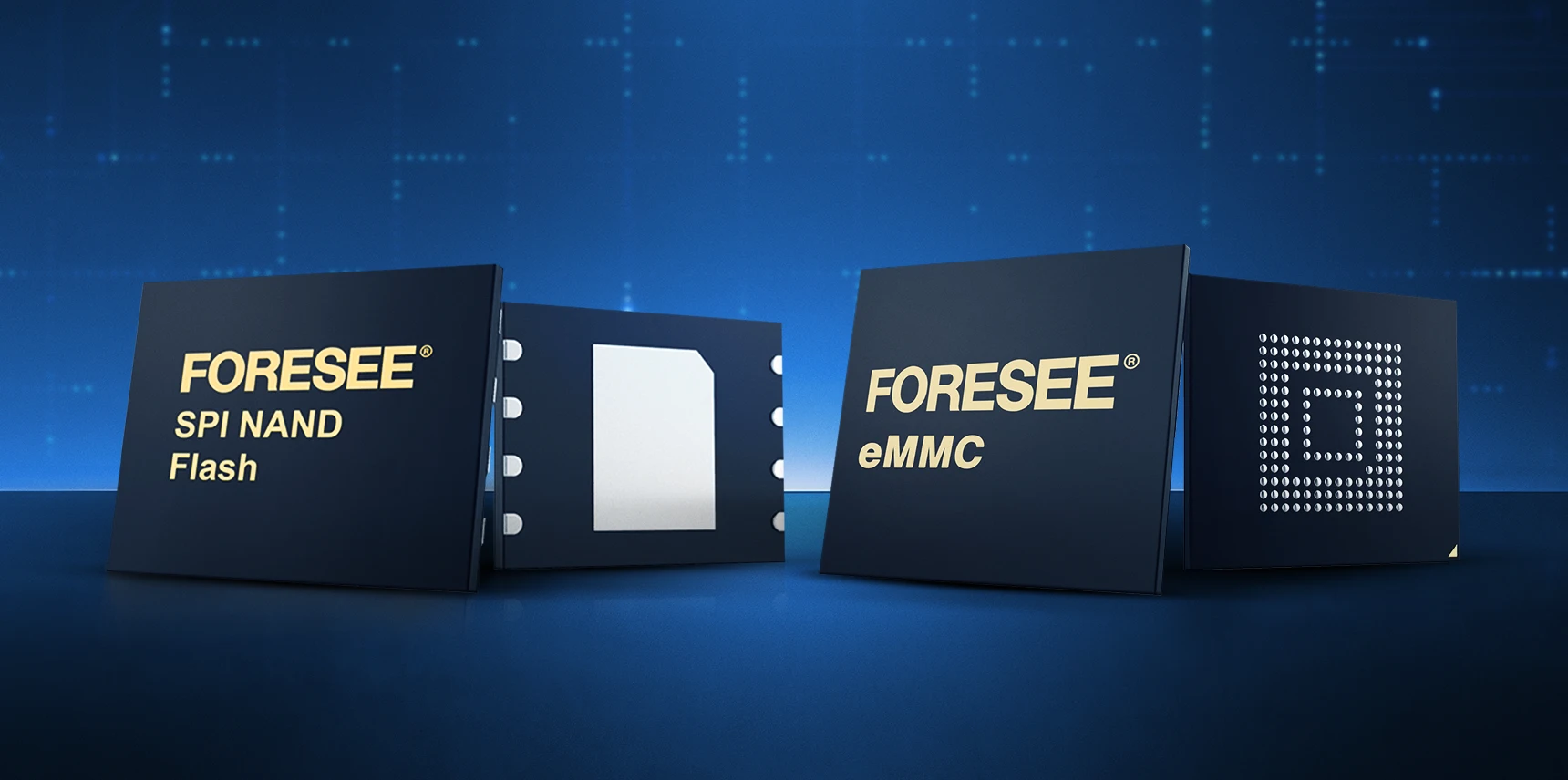
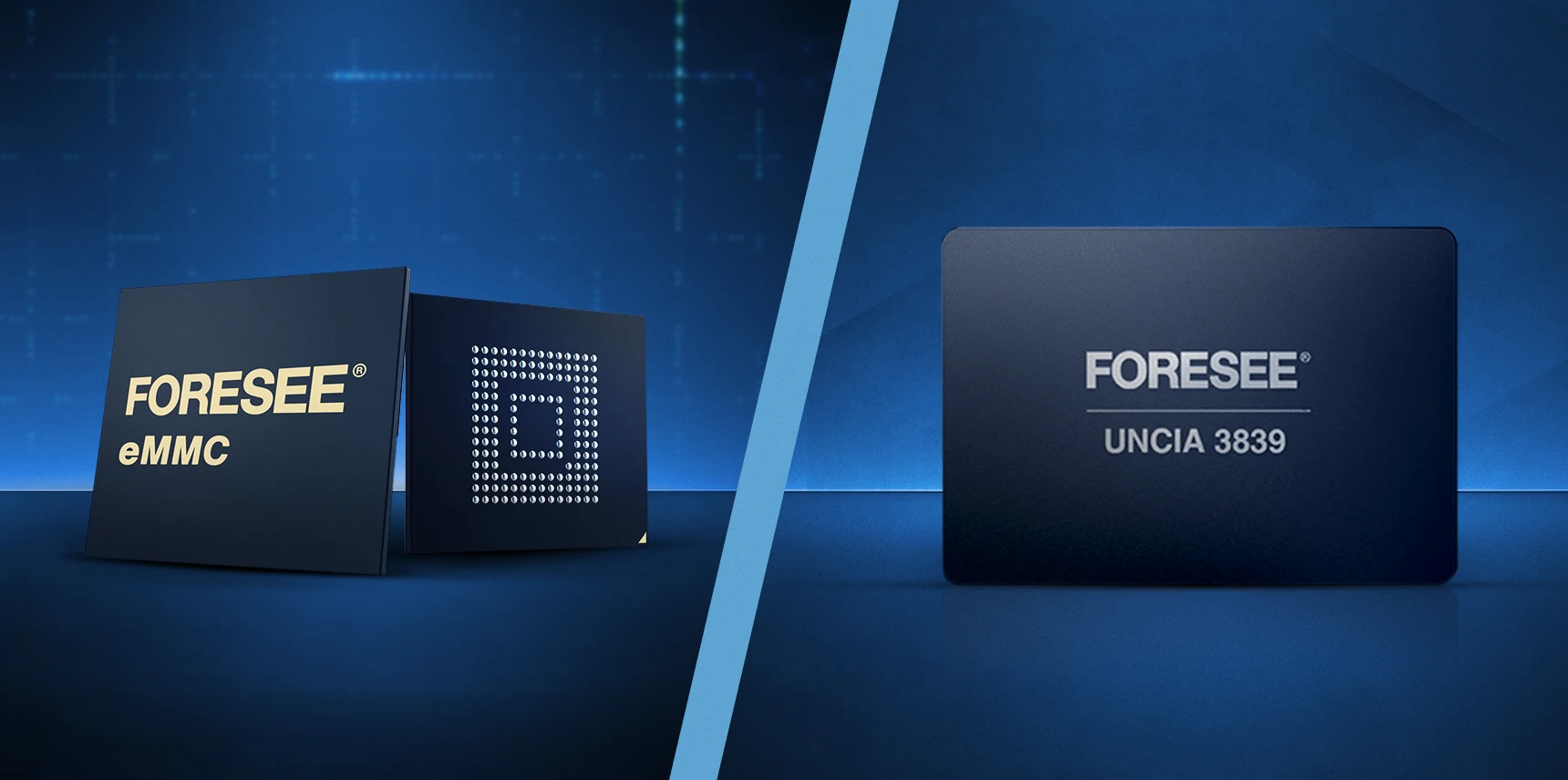
Lexar Enterprise provides comprehensive memory solutions specifically engineered for industrial automation and robotics applications. As demonstrated in our FORESEE product line, our category solutions include embedded storage, mobile memory, solid-state drives, and memory modules in commercial, industrial, industrial-wide temperature, enterprise, and automotive grades.
Industrial-Grade eMMC Storage
At Lexar Enterprise, we offer an expansive portfolio of embedded memory solutions, including eMMC, UFS, LPDDR4/4x and LPDDR5, with commercial, industrial, and automotive grade temperatures. Our solutions provide:
- Extended operating temperature ranges from -40°C to +105°C
- Enhanced error correction and data protection features
- Optimized wear leveling for high-write environments
- Long-term availability for extended product lifecycles
UFS Solutions for High-Performance Applications
For automation systems requiring maximum performance, our Lexar Enterprise UFS solutions deliver the speed and reliability needed for:
- Real-time control systems with microsecond response requirements
- AI-powered quality inspection systems processing high-resolution imagery
- Predictive maintenance platforms analyzing massive sensor datasets
- Advanced robotics requiring complex motion control algorithms
Industrial Memory Cards for Flexible Storage
Lexar Enterprise industrial memory cards deliver superior performance with features like wide temperature ranges, error correction, and power loss protection, ensuring application reliability.
We’ve designed these ruggedized storage solutions to support field-replaceable architectures and provide expandable capacity for growing data requirements.
The Technology Evolution Driving Memory Demand
Global industrial robot adoption hit record levels, with the value of new installations reaching $16.5 billion in 2024. Over 4.28 million robots are now operating in factories worldwide. This massive automation expansion creates unprecedented demands on memory systems.
Blending AI capabilities with robotic machinery has given rise to a new generation of smart automation tools that analyze enormous volumes of data, identify patterns, and continuously refine their actions without explicit reprogramming.
Based on our work with automation clients, we know these intelligent systems require memory solutions that can:
- Support continuous learning algorithms that modify stored parameters
- Handle real-time data fusion from multiple sensor inputs
- Maintain historical data for trend analysis and optimization
- Provide secure storage for intellectual property and trade secrets
Implementation Best Practices for Memory Selection
When selecting memory for industrial automation and robotics applications, these proven strategies have been developed through years of working with automation engineers:
Match Memory Type to Application Requirements
- Control systems and safety functions: Use industrial-grade eMMC for reliability and cost-effectiveness
- AI and machine learning applications: Deploy UFS for maximum performance and bandwidth
- Data logging and archives: Implement industrial memory cards for flexibility and expandability
- Hybrid systems: Combine multiple memory types to optimize performance and cost
Plan for Long-Term Availability
Industrial automation systems often operate for decades. Select memory suppliers who guarantee long-term availability and provide migration paths for evolving technologies.
Validate Environmental Performance
Always advise conducting thorough testing under actual operating conditions rather than relying solely on specifications. Temperature cycling, vibration testing, and electromagnetic compatibility validation ensure reliable operation.
Implement Redundancy and Backup Strategies
Critical automation systems require memory redundancy to prevent single points of failure. We recommend designing systems with backup storage and automatic failover capabilities.
Future-Proofing Your Automation Memory Strategy
Today, demand for autonomous machines and AI-enabled robots is at an all-time high, as industries seek to improve operational efficiency, address workforce shortages, optimize repetitive tasks, and manage hazardous tasks or environments.
The future of industrial automation depends on memory systems that support:
- Edge computing capabilities for real-time decision making
- Secure storage for protecting intellectual property and operational data
- Scalable architectures that grow with expanding automation implementations
- Integration with cloud-based analytics and remote monitoring systems
Your automation success depends on selecting memory solutions that deliver reliable performance today while providing a foundation for tomorrow’s advanced capabilities. Lexar Enterprise is committed to supporting that journey with solutions designed for current and future requirements.
Take Action on Your Memory Strategy
The gap between automation potential and actual performance often stems from inadequate memory selection. Every day of delayed implementation costs money in missed efficiency gains and competitive disadvantage.
Start by auditing your current automation systems to identify memory-related bottlenecks. Evaluate whether your existing storage solutions meet the temperature, endurance, and performance requirements of your specific applications with memory suppliers that understand industrial requirements and provide long-term support.
Your factory’s future depends on the foundation for storage you build today. Lexar Enterprise is here to help you choose memory solutions that support current automation requirements and the advanced AI-driven systems you’ll deploy tomorrow.