
Engineers select SATA because it’s familiar, widely supported, and seemingly sufficient for the application requirements specified two years ago. That conservative choice costs system performance when data throughput requirements double, leaves thermal headroom on the table when power budgets tighten, and forces redesigns when latency-sensitive applications require response times that SATA cannot deliver.
What engineers actually need for interface selection is latency and throughput comparisons under real industrial workloads, power consumption analysis across operating states, connector and form factor compatibility with space-constrained enclosures, and environmental qualification data for temperature extremes and vibration profiles. This is the technical framework that determines whether your storage interface becomes a system bottleneck or an enabling technology for next-generation industrial applications.
Understanding the Interface Architecture Difference
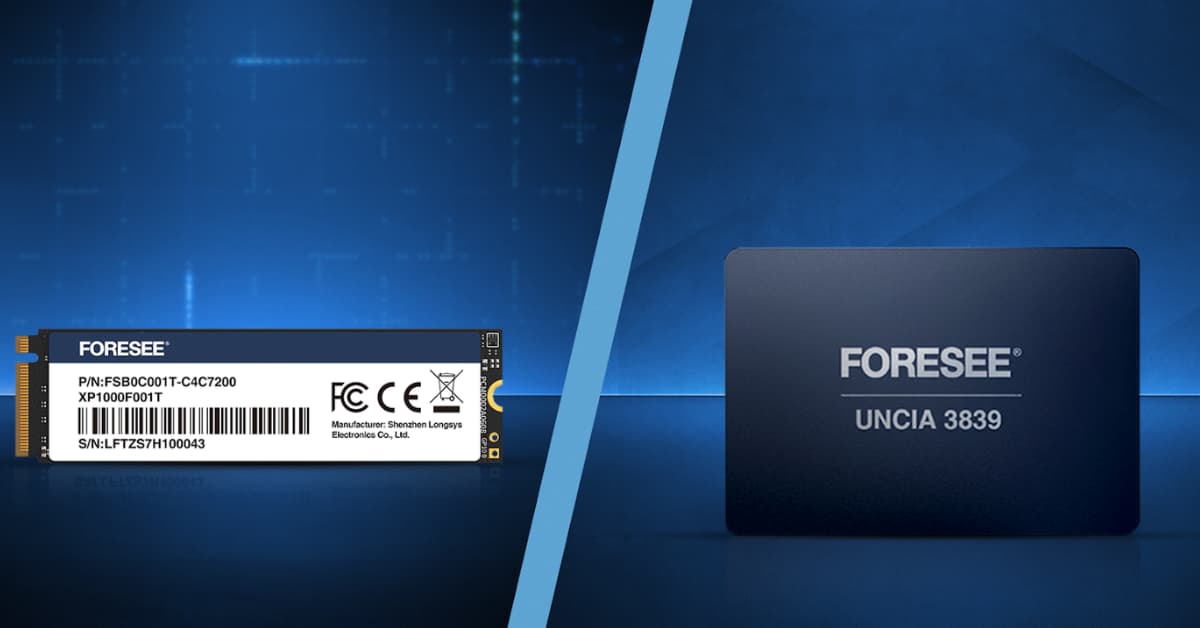
NVMe vs SATA represents fundamentally different approaches to connecting storage to processors. SATA uses the Serial ATA interface with AHCI protocol drivers originally designed for rotating hard disk drives. NVMe leverages PCIe lanes with a protocol specifically designed for solid-state NAND flash, eliminating legacy architectural constraints that limit SATA performance.
The architectural distinction matters because it determines not just peak performance numbers – it controls system-level characteristics like CPU utilization, interrupt handling, and multi-threaded workload efficiency. SATA’s single command queue with 32 command depth creates bottlenecks when multiple sensors or processes attempt simultaneous storage access. NVMe supports up to 64,000 command queues, each with 64,000 commands, enabling true parallel operation that matches modern multi-core processor architectures.
This difference in queue architecture directly impacts industrial system responsiveness. An automotive telematics unit that simultaneously logs GPS data, processes CAN bus messages, and buffers video streams benefits from NVMe’s ability to handle these parallel data flows without serialization delays. SATA forces these operations into a sequential pipeline, increasing latency and reducing overall system throughput.
Latency and Throughput: Quantifying Performance Differences
NVMe drives using PCIe Gen 3 x4 configuration achieve latencies below 20 microseconds for typical read operations, compared to 60 to 100 microseconds for SATA SSDs. This 3x to 5x latency advantage compounds across thousands of operations per second in data-intensive industrial applications.
Throughput differences exceed the latency gap. SATA III bandwidth caps at 6 Gb/s, delivering approximately 550 MB/s after protocol overhead. NVMe PCIe Gen 3 x4 provides up to 4 GB/s read and write throughput — roughly 7x faster than SATA. PCIe Gen 4 doubles this to 8 GB/s, while emerging Gen 5 implementations reach 16 GB/s bidirectional bandwidth.
Industrial Applications Experiencing Performance Differences
- Machine Vision Systems – High-resolution camera data at 60+ fps generates sustained write loads exceeding SATA capabilities. NVMe handles 4K and 8K video streams without frame drops.
- Edge AI Inference – NVMe reduces inference latency by loading neural network weights faster for real-time decision systems.
- Data Logging – NVMe’s sustained write performance prevents data loss during power transients common in mobile applications.
- Embedded Databases – NVMe’s low latency for random reads improves query response times for real-time analytics.
SATA SSDs deliver 90,000 to 100,000 IOPS for random operations. NVMe drives routinely exceed 500,000 IOPS, with industrial modules reaching 1.4 million IOPS or higher.
Power Consumption Analysis Across Operating States
Comparing power consumption between NVMe and SATA requires careful analysis across different operating states rather than relying on simple peak power specifications. Industrial applications spend significant time in idle or low-activity states, where power characteristics differ substantially from those during active operation.
Active Power Consumption
During active read/write operations, NVMe drives typically consume more instantaneous power than SATA equivalents. M.2 SATA SSDs draw 2 to 3 watts during active operations, while NVMe drives range from 3.5 watts for entry-level modules to 6 to 8 watts for high-performance industrial units. PCIe Gen 4 and Gen 5 NVMe drives can peak at 10-12 watts under sustained, heavy workloads.
However, this raw power comparison ignores performance per watt efficiency. NVMe completes operations 4x to 7x faster than SATA, meaning the higher instantaneous power consumption occurs for shorter durations. For workloads involving large file transfers or database queries, NVMe returns to the idle state faster, reducing total energy consumed per operation despite higher peak draw.
Idle Power States
SATA SSDs with Aggressive Link Power Management and DevSleep states can achieve idle power below 0.2 watts in M.2 form factors and 0.9 watts in 2.5-inch form factors. NVMe idle power varies widely depending on power-state support, ranging from 0.003 watts with aggressive power management to 3.5 watts for drives that don’t fully implement low-power states.
Industrial NVMe implementations that support full power-state management, including Autonomous Power State Transition and PCIe Active State Power Management, achieve idle power consumption competitive with or better than SATA. Modern industrial NVMe drives specifically designed for embedded applications typically specify idle power between 0.05 and 0.5 watts.
Power Considerations for Industrial Design
- Thermal Design – NVMe M.2 drives in confined spaces may require heatsinks or active cooling. SATA drives with lower power density simplify passive cooling in fanless designs.
- Power Supply Capacity – A system running four NVMe drives simultaneously could require 40+ watts for storage alone, versus 12 watts for SATA.
- Duty Cycle Analysis – Applications with sporadic bursts followed by extended idle favor NVMe despite higher peak power. Continuous moderate-bandwidth applications may achieve lower total power with SATA.
- Power State Latency – NVMe low-power states carry latencies from microseconds to milliseconds. Real-time systems requiring guaranteed response times may need to disable aggressive power management.
Connector Types and Form Factor Compatibility
Physical connectivity determines which storage interface fits specific industrial hardware designs. Understanding connector standards and form factor options allows engineers to match storage solutions to mechanical and electrical constraints.
SATA Connector Options
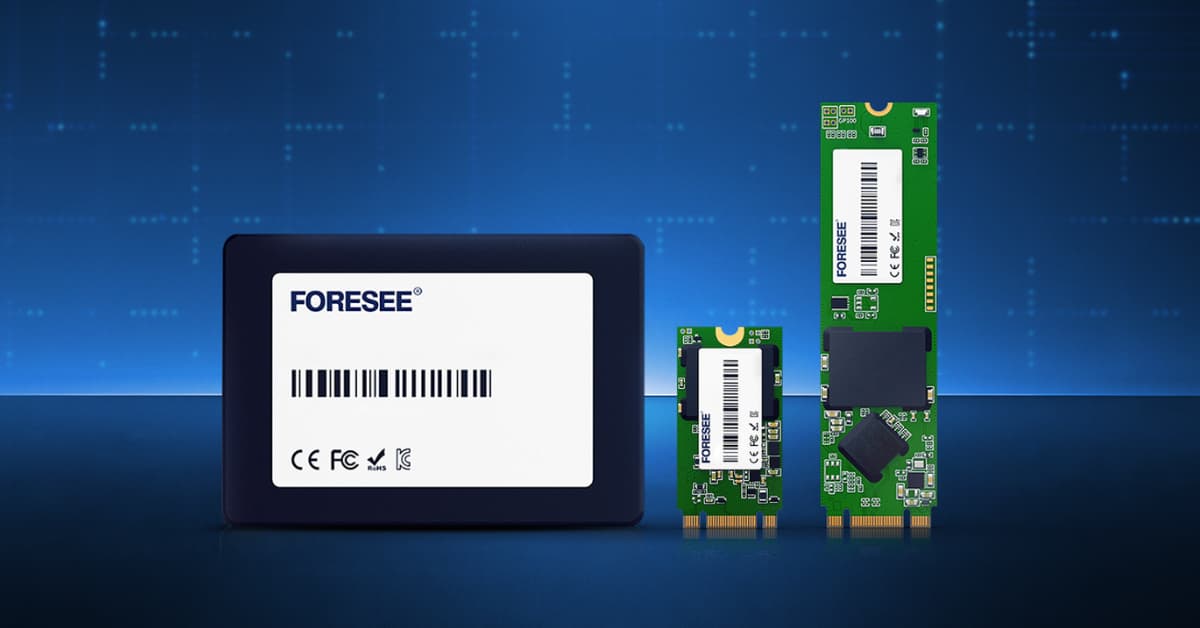
- 2.5-inch SATA – Standard connector, 100mm x 70mm x 7mm dimensions suit replaceable drive bays
- M.2 SATA – B-key or B+M key, common lengths 2230mm-2280mm, 22mm width
- mSATA – 30mm x 50mm compact option, being superseded by M.2
- SATA DOM – Direct motherboard mounting, reduces failure points from cables
- Rugged SATA – Locking connectors for high-shock environments
NVMe Connector Options
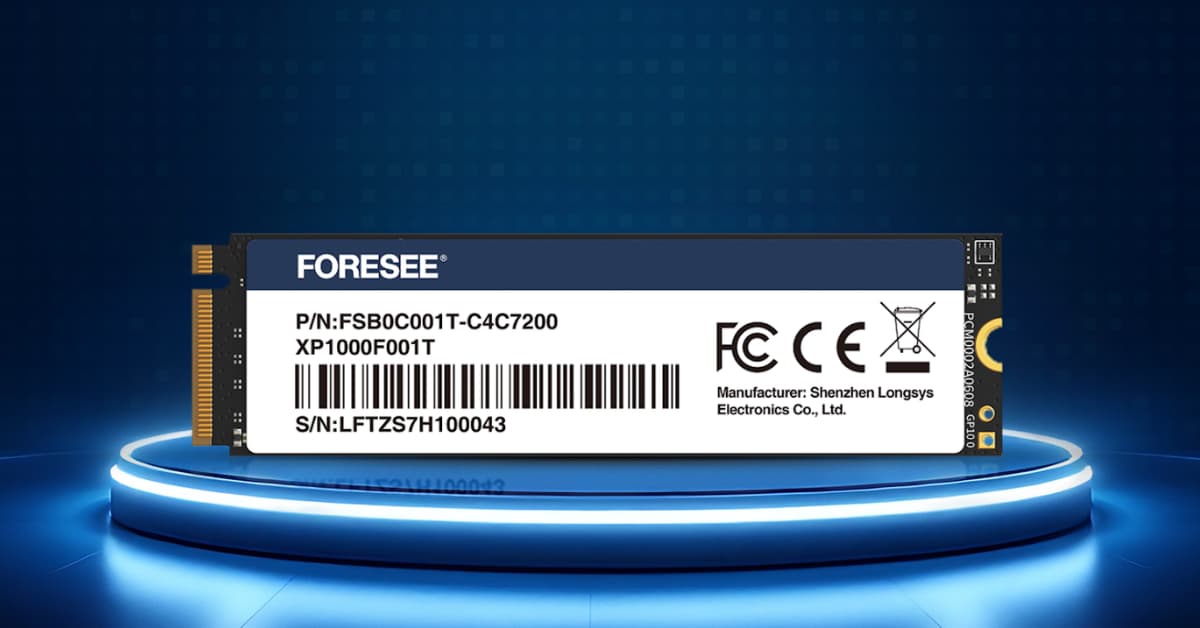
- M.2 NVMe (M-key) – PCIe interface supporting x2 or x4 lanes, same lengths as M.2 SATA
- U.2 (SFF-8639) – 2.5-inch form factor, hot-swap capability, 25W power delivery
- PCIe Add-in Card – Full or half-height cards with x4/x8/x16 connectors
- BGA (Ball Grid Array) – Soldered storage, maximum vibration resistance, lowest profile
Industrial Form Factor Selection Criteria
- Mechanical Robustness – Socketed M.2 modules require retention mechanisms preventing dislodgement during shock and vibration. Soldered BGA options eliminate connector reliability concerns entirely.
- Thermal Coupling – M.2 drives rely on board-level heat spreading. Metal retention brackets or thermal pads improve heat dissipation. U.2 drives with a metal chassis offer better intrinsic cooling.
- Serviceability Requirements – Applications requiring field replacement favor socketed M.2 or U.2 interfaces. Safety-critical systems may prefer soldered BGA to eliminate connector failure modes.
- Legacy Compatibility – Systems designed around existing SATA infrastructure can use M.2 SATA modules for drop-in upgrades without electrical redesign.
Environmental Compatibility for Industrial Deployments
Industrial and automotive applications are subject to environmental stresses that consumer electronics never encounter. Temperature extremes, mechanical shock, vibration, humidity, and power transients all impact storage reliability. Both NVMe and SATA drives offer industrial-grade variants, but qualification levels and environmental capabilities differ between implementations.
Temperature Range Qualifications
- Industrial Temperature (-40°C to 85°C) – Covers most industrial automation, outdoor installations, and commercial vehicle applications
- Extended Industrial (-40°C to 105°C) – For under-hood automotive or equipment near heat sources
- Automotive AEC-Q100 Grade 3 (-40°C to 85°C) – Commercial vehicle electronics in passenger compartments
- Automotive AEC-Q100 Grade 2 (-40°C to 105°C) – Under-hood or transmission control applications
NVMe drives with higher power dissipation may experience thermal throttling at elevated ambient temperatures. Industrial NVMe implementations incorporate thermal sensors and dynamic thermal management.
Shock and Vibration Resistance
- MIL-STD-810G Shock – Industrial drives typically specify 1500G to 1800G shock resistance, non-operating, 500G operating
- MIL-STD-810G Vibration – Industrial specifications commonly cite 20G RMS vibration for the operating state
- IEC 60068-2-6 – Alternative qualification standard testing multiple axes with varying frequencies
Soldered BGA NVMe eliminates connector failure modes for maximum shock and vibration resistance. M.2 modules require strong retention mechanisms.
Additional Environmental Protections
- Conformal Coating – A protective polymer layer that covers circuit boards and components, providing moisture resistance and protection against dust, salt spray, and corrosive atmospheres.
- Underfill – Epoxy material fills gaps under BGA components, reinforcing solder joints against thermal cycling stress and mechanical shock.
- Component Derating – Industrial designs use capacitors, inductors, and power components rated for wider temperature ranges than required, improving reliability under thermal stress.
- Power-Loss Protection – Tantalum capacitors provide backup power, completing pending write operations during unexpected power failures. Both SATA and NVMe industrial drives offer power-loss protection options.
Reliability and Lifetime Specifications
Industrial applications frequently specify extended operational lifetimes measured in years of continuous operation:
- Mean Time Between Failures (MTBF) – Industrial SSDs specify MTBF of 2 to 5 million hours, translating to over 200 years of continuous operation under standard conditions.
- Terabytes Written (TBW) – Quantifies endurance through total data written before NAND wear-out. Industrial drives using SLC or pSLC NAND achieve TBW specifications that are 10x to 30x higher than those of consumer drives.
- Drive Writes Per Day (DWPD) – Industrial drives commonly specify 1 to 10 DWPD for 5-year warranty periods, compared to the typical 0.3 DWPD for consumer drives.
Both SATA and NVMe interfaces support industrial reliability when paired with appropriate NAND technology and controller firmware. The interface selection doesn’t inherently determine reliability – the drive’s internal architecture, NAND type, and firmware determine endurance characteristics.
Interface Selection Framework for Industrial Applications
Engineers selecting between NVMe and SATA for industrial storage should evaluate application requirements across multiple dimensions rather than defaulting to familiar interfaces or chasing maximum performance specifications.
Choose SATA When
- Sequential Performance Suffices – Applications with moderate bandwidth requirements below 500MB/s gain no benefit from NVMe complexity. Firmware updates, configuration storage, or logging at moderate data rates work effectively with SATA.
- Lowest Power Operation Critical – Battery-powered edge devices or solar-powered remote installations where every milliwatt matters benefit from SATA’s lower active power draw.
- Extended Temperature SATA Available – When the vendor ecosystem offers a wider selection of qualified SATA drives for specific temperature or environmental requirements.
- Legacy System Integration – Retrofit applications or systems already designed around SATA infrastructure simplify implementation without motherboard redesign.
- Cost Optimization Priority – Entry-level SATA SSDs remain less expensive than equivalent-capacity NVMe modules. High-volume production systems with tight cost targets may justify SATA despite performance limitations.
- Simple Thermal Management – Fanless designs or passively-cooled enclosures benefit from SATA’s lower power density, reducing mechanical complexity.
Choose NVMe When
- Latency Matters – Real-time data acquisition systems, edge AI inference applications, or industrial control systems that require sub-millisecond storage response times benefit from NVMe’s 3x to 5x latency advantage.
- High Throughput Required – Machine vision processing of 4K video streams, automotive ADAS systems fusing multi-sensor data, or data logging applications capturing high-frequency sensor measurements require NVMe’s multi-GB/s bandwidth.
- Parallel I/O Workloads – Applications with multiple concurrent storage operations leverage NVMe’s 64K queue architecture for true parallel processing.
- Space Constraints – M.2 NVMe modules offer the highest storage density per cubic millimeter of board space. BGA NVMe solutions offer minimum profiles for ultra-compact designs.
- Performance Per Watt Optimization – Workloads with burst characteristics followed by idle periods favor NVMe’s ability to complete operations quickly and return to low-power states.
- Future-Proofing Requirements – New designs targeting 5+ year production lifecycles benefit from NVMe’s performance headroom, accommodating growth in requirements.
Application-Specific Interface Recommendations
Automotive Applications
- Telematics Logging – NVMe for burst logging of GPS, CAN bus, and diagnostics with minimal impact on system responsiveness
- Infotainment – NVMe improves application launch times and multimedia content loading
- ADAS Data Recording – NVMe required for multi-camera recording. 4+ camera streams at 30fps plus LIDAR/radar exceed SATA bandwidth
Industrial Applications
- Motion Control – SATA is sufficient for control programs and configuration storage
- Machine Vision – NVMe required for high-speed multi-camera systems, which prevents frame drops
- Industrial PCs – NVMe improves responsiveness; SATA acceptable for dedicated HMI
Edge Computing
- Edge AI – NVMe preferred for loading ML models and preprocessing, reduces inference latency
- IoT Gateways – SATA is sufficient for buffering sensor data, lower power extends battery life
- Edge Analytics – NVMe supports real-time processing and time-series databases
Medical Equipment
- Medical Imaging – NVMe required for high-resolution CT, MRI, and ultrasound processing
- Patient Monitoring – SATA acceptable for continuous vital sign logging
- Lab Analyzers – NVMe improves sample throughput
Lexar Enterprise Industrial Storage Solutions
The Lexar Enterprise portfolio provides a wide range of automotive storage solutions that are qualified for industrial temperature ranges, shock and vibration resistance, and extended endurance requirements.
Industrial SATA SSD Portfolio
- Temperature Qualification – Operates -40°C to 85°C with validated performance at temperature extremes
- Form Factors – 2.5-inch, M.2 2242/2260/2280, and mSATA configurations
- Power Consumption – Active power under 3 watts, idle below 0.8 watts
- Endurance – pSLC NAND variants with TBW specifications exceeding consumer drives by 10x
Industrial NVMe SSD Portfolio
- Performance – PCIe Gen 3 x4 delivers up to 3.5 GB/s sequential, 500,000+ IOPS random
- Power Management – APST and PCIe ASPM provide idle power competitive with SATA
- Environmental Qualification – MIL-STD-810G testing, conformal coating options, BGA variants available
- Thermal Solutions – Dynamic throttling and temperature monitoring prevent degradation
Technical Support
Lexar Enterprise field application engineers provide interface selection analysis, thermal simulation, qualification support with test reports and reliability predictions, and custom solutions for high-volume applications.
Making the Interface Decision
NVMe and SATA both serve industrial storage requirements effectively when matched to appropriate applications. Start with application requirements – actual throughput needs in MB/s, latency requirements in microseconds, power budget in watts, and environmental conditions, including temperature ranges and vibration profiles. Match these requirements against interface capabilities documented in vendor datasheets.
Consider system-level implications beyond storage subsystem specifications. NVMe’s lower latency may improve overall system responsiveness even when raw throughput proves unnecessary. SATA’s wider vendor ecosystem might simplify procurement. Thermal management complexity could drive interface selection in fanless designs.
Lexar Enterprise supports industrial engineers with technical documentation, application-specific performance data, and engineering consultation. Contact Lexar Enterprise field application engineers for consultation on interface selection, thermal management, and validation testing.