
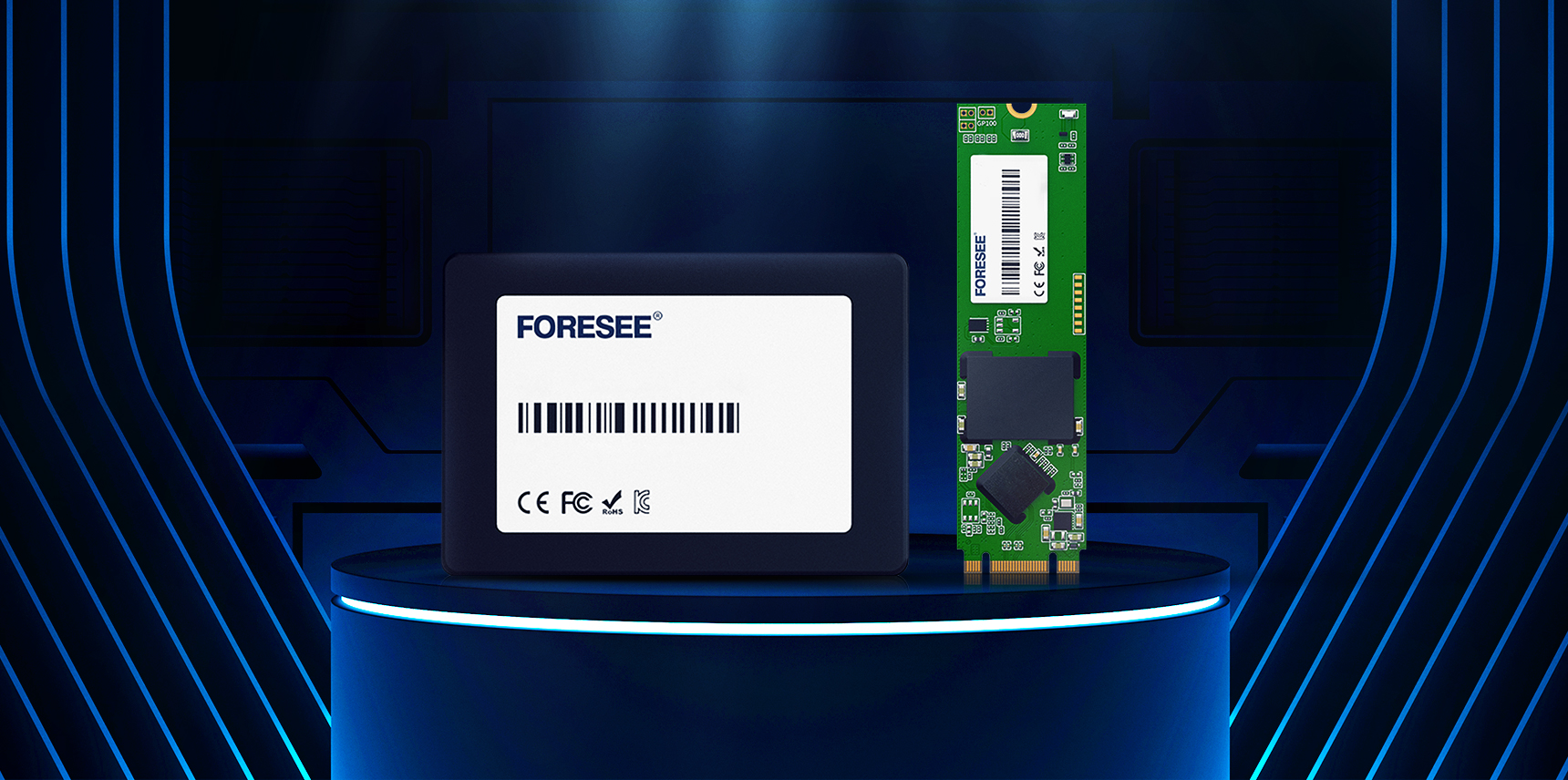
An industrial solid-state drive (SSD) is a storage device specifically engineered to operate reliably in demanding environmental conditions that would compromise standard commercial storage devices. Industrial SSDs incorporate physical hardening, component-level protection, and specialized firmware to withstand shock, vibration, temperature extremes, humidity, altitude, and electromagnetic interference.
The term “industrial-grade” indicates compliance with manufacturing and automation standards—specifically IEC 61131-2, ISO 9001, and equivalent specifications. These standards define testing procedures that simulate actual field conditions across factories, transportation systems, and outdoor installations. Testing protocols include mechanical shock from equipment operation and impacts, sustained vibration from manufacturing machinery and vehicles, temperature cycling from cold storage facilities to high-heat industrial processes, altitude operation for aviation and mountain installations, humidity and condensation exposure in processing facilities, dust infiltration in manufacturing environments, and chemical resistance for petrochemical and processing applications.
Physical construction includes conformal coating applied to circuit boards and components, which provides moisture protection and prevents foreign material infiltration. Underfill strengthens solder joints between components and boards, increasing vibration and thermal stress resistance. Some implementations use specialized solder formulations to avoid tin whisker growth that can cause short circuits. Staking secures larger components with additional adhesive to prevent mechanical stress during shock events.
Industrial SSDs typically operate across extended temperature ranges from -40°C to +85°C for standard applications, with specialized versions extending to +105°C for high-temperature industrial processes. These temperature specifications maintain reliable data retention and consistent performance whether mounted in equipment operating in refrigerated warehouses or outdoor installations with direct solar heating.
Industrial Solid-State Drive Standards and Certifications
IEC 61131-2 Industrial Automation: The International Electrotechnical Commission standard IEC 61131-2 establishes requirements for programmable controllers used in industrial automation. While primarily focused on control systems, this standard establishes environmental testing criteria widely adopted for industrial computing components, including storage. The standard covers comprehensive environmental testin,g including mechanical shock, vibration, temperature extremes, humidity, electromagnetic compatibility, and electrical safety. Compliance demonstrates suitability for factory floor deployment and industrial automation applications.
Shock Resistance: Measured in G-forces, shock resistance indicates survivable impact levels during industrial operation. Industrial-grade SSDs typically withstand 1000G to 1500G shock at 0.5 millisecond duration during operation. Non-operating shock resistance can exceed 2000G. Standard consumer SSDs might specify 500G non-operating shock tolerance but lack operating shock ratings. The difference reflects reinforced mounting, strengthened solder joints, and component selection optimized for mechanical stress.
Vibration Resistance: Sustained vibration stresses solder joints, breaks circuit traces, and causes component failures in standard drives. Industrial testing exposes devices to random or sinusoidal vibration from 5 Hz to 2000 Hz. Industrial-grade SSDs withstand 16.4G sustained vibration across this frequency range. Different frequency profiles replicate specific environments – conveyor systems, manufacturing equipment, railway operation, or heavy machinery. Consumer drives typically specify 2G-3G vibration tolerance, inadequate for industrial deployment.
Temperature Specifications: Extended temperature operation requires specialized components and thermal management. Industrial-grade SSDs function from -40°C to +85°C as standard, with high-temperature variants operating to +105°C. These ranges provide reliable startup at extreme cold, where NAND flash characteristics change significantly, and sustained operation at elevated temperatures without data corruption or throttling. Storage and non-operating temperature ranges extend even wider, often from -65°C to +150°C for transportation and warehouse applications.
Altitude Operation: Industrial SSDs operate reliably at altitudes exceeding 24,384 meters (80,000 feet), with some implementations qualified to 30,480 meters (100,000 feet). Reduced atmospheric pressure at altitude affects component cooling and can cause outgassing from materials, creating potential contamination. Altitude specifications matter for aviation systems, mountain installations, and high-altitude communication equipment.
Additional Certifications: Ingress protection (IP) ratings indicate dust and water resistance – IP66 protects against dust ingress and powerful water jets, IP67 withstands temporary immersion, IP68 allows sustained submersion. Chemical resistance testing simulates exposure to industrial solvents, oils, and cleaning agents. Electromagnetic compatibility standards prevent interference with industrial control systems and communication equipment. CE marking demonstrates compliance with European Union directives for industrial equipment.
Industrial SSD Construction and Features
Physical construction and component selection differentiate industrial SSDs from consumer drives.
NAND Flash Selection
Industrial drives use carefully screened NAND flash dies optimized for reliability and endurance:
- Single-level cell (SLC) NAND offers maximum endurance and temperature stability, supporting 100,000 program/erase cycles. SLC remains the preferred choice for critical industrial applications requiring maximum reliability.
- Multi-level cell (MLC) NAND provides good endurance at 30,000 cycles with lower cost than SLC. Industrial MLC uses enhanced screening and over-provisioning.
- pSLC mode operates MLC NAND in single-level mode, achieving SLC-like endurance while maintaining MLC economics. This technology balances cost and performance for many industrial applications.
- Triple-level cell (TLC) NAND appears in some industrial applications where cost matters more than maximum endurance, though industrial-grade TLC uses extensive screening and over-provisioning to improve reliability beyond consumer specifications.
Controller Technology
Industrial-grade drives use controllers optimized for reliability over maximum performance. Power loss protection circuitry detects voltage drops and completes critical operations before shutdown. Tantalum or supercapacitors provide hold-up power to flush write caches and update metadata, preventing data corruption during unexpected power interruptions common in industrial environments.
Temperature sensors enable thermal monitoring and throttling to prevent data corruption at extreme temperatures. Advanced error correction beyond standard LDPC improves data integrity when NAND cells degrade from temperature stress or extended operational life. Wear leveling algorithms distribute write operations across all flash cells, maximizing overall drive endurance.
Conformal Coating
Protective coating applied to assembled circuit boards prevents moisture ingress, dust accumulation, and chemical contamination. The coating process adds manufacturing cost but dramatically improves reliability in humid industrial environments, outdoor installations, or areas with airborne contaminants. Different coating materials suit different requirements – acrylic, silicone, urethane, and parylene each offer specific protection characteristics for various industrial conditions.
Mechanical Reinforcement
Underfill material between components and the circuit board strengthens solder joints, distributing mechanical stress and improving vibration resistance. Staking uses adhesive to secure large components like connectors and controllers, preventing relative motion during shock events. Some implementations use metal frames or heat spreaders that provide structural reinforcement beyond thermal management.
Connector Options
Standard SATA connectors work adequately in controlled environments but prove vulnerable to vibration. Industrial SATA connectors use improved retention mechanisms and reinforced construction. M.2 drives rely on secure screw mounting rather than edge connectors, subject to unseating during equipment operation. Some industrial applications use custom connectors designed specifically for high-vibration environments.
Data Security Features
Industrial applications demand data protection capabilities. AES-256 encryption prevents unauthorized data access if drives are removed or equipment is compromised. Secure erase functions quickly sanitize drives for redeployment or decommissioning. Write-protect modes prevent tampering or accidental modification of stored configuration data and operational parameters.
Performance Specifications
Industrial SSDs balance performance with reliability and environmental tolerance.
Sequential Performance
SATA-based industrial SSDs achieve typical sequential reads of 500MB/s to 550MB/s and writes of 400MB/s to 520MB/s, limited by the SATA III interface maximum of 600MB/s. PCIe-based industrial drives using NVMe protocol reach significantly higher speeds – Gen 3 implementations deliver 3500MB/s reads, while Gen 4 can exceed 7000MB/s. However, industrial specifications often prioritize reliability over absolute maximum performance, with drives specified for stable operation across full temperature ranges rather than peak room-temperature performance.
Random Performance
Random read/write IOPS vary based on capacity, NAND type, and controller implementation. SLC-based drives deliver 50,000 to 80,000 random read IOPS with excellent consistency. MLC implementations reach 40,000-60,000 IOPS. Random write performance typically runs 20 percent to 40 percent lower than reads. Consistent IOPS across the full temperature range matters more for industrial applications than peak room-temperature performance.
Endurance and MTBF
Industrial drives specify significantly higher endurance than consumer devices. SLC-based drives rate 100,000 program/erase cycles or higher. MLC and pSLC implementations specify 30,000-60,000 cycles. Mean time between failures (MTBF) ratings for industrial-grade SSDs exceed 4 million hours, compared to 1.5 million to 2 million hours for consumer drives. These ratings reflect both better NAND screening and more conservative operating conditions optimized for continuous industrial operation.
Latency and Consistency
Predictable latency matters for real-time industrial control applications. Industrial SSDs maintain consistent response times across temperature extremes rather than exhibiting the performance variation common in consumer drives when operating outside optimal temperature ranges. This consistency proves critical for automation systems, process control, and transportation applications where timing requirements cannot shift based on environmental conditions.
Power Consumption
Industrial SSDs typically consume 3 watts to 8 watts during active operation, depending on capacity and interface type. Lower power consumption reduces thermal management requirements and allows deployment in power-constrained industrial equipment. Sleep and standby modes drop consumption below 1 watt. Some industrial applications specify exact power budgets that storage cannot exceed, particularly for battery-backed or solar-powered installations.
Applications for Industrial SSDs
Industrial SSD technology addresses diverse demanding applications across manufacturing, transportation, and infrastructure sectors.
Manufacturing and Factory Automation
Industrial control systems, programmable logic controllers (PLCs), and human-machine interfaces (HMIs) use industrial SSDs for configuration storage, data logging, and operational parameters. Robotic systems require storage that withstands continuous operation and vibration from mechanical movement. Machine vision systems generate continuous image data requiring reliable storage. Manufacturing execution systems (MES) and supervisory control and data acquisition (SCADA) platforms depend on industrial-grade storage for process data and historical records.
Transportation Systems
Railway systems install industrial SSDs in onboard computers, signaling systems, and passenger information displays. Marine vessels use industrial storage in navigation equipment, engine monitoring, and communication systems, where salt air and constant vibration create demanding conditions. Automotive applications include telematics systems, fleet management computers, and specialized vehicle equipment. Autonomous vehicle development platforms require reliable storage for sensor fusion, mapping data, and control systems.
Energy and Utilities
Power generation facilities deploy industrial SSDs in control systems, monitoring equipment, and data acquisition systems. Smart grid infrastructure uses industrial storage for substation automation and grid management. Oil and gas operations require storage in drilling equipment, pipeline monitoring, and remote sensing, where equipment operates continuously in challenging conditions with minimal maintenance access. Renewable energy installations including wind turbines and solar farms use industrial SSDs for operational monitoring and control.
Telecommunications
Base stations and cell towers use industrial SSDs in outdoor-rated equipment exposed to temperature extremes and weather conditions. Network infrastructure equipment requires storage that operates reliably for years with minimal maintenance. Edge computing deployments at cell sites and distribution points use industrial storage for local processing and caching. Fiber optic network nodes and distribution equipment rely on industrial-grade components for outdoor deployment.
Building Automation and Infrastructure
HVAC control systems, elevator controls, and building management systems use industrial SSDs for configuration and operational data. Access control and security systems require reliable storage for credential databases and event logs. Parking management systems, traffic control equipment, and smart city infrastructure deploy industrial storage in outdoor installations.
Medical and Laboratory Equipment
Industrial medical equipment including diagnostic imaging systems, laboratory analyzers, and pharmaceutical manufacturing equipment uses industrial SSDs where reliability and data integrity prove critical. Sterilization equipment, cleanroom systems, and medical gas monitoring require storage that withstands specialized environmental conditions.
Outdoor and Environmental Monitoring
Weather stations, environmental sensors, and air quality monitoring equipment deploy industrial SSDs in outdoor installations exposed to temperature extremes, moisture, and precipitation. Water treatment facilities, wastewater systems, and agricultural monitoring use industrial storage in challenging environments. Remote installations including weather stations, seismic monitoring, and wildlife tracking systems require storage that operates reliably with minimal maintenance.
Consumer vs Industrial-Grade Storage
The term “industrial-grade” represents specific protection levels and specifications distinct from consumer products.
Consumer Standard SSDs
Standard consumer SSDs target desktop computers, laptops, and personal storage applications. These drives operate in controlled indoor environments with temperatures from 0°C to +70°C. Shock and vibration specifications assume minimal mechanical stress from typical consumer use. Consumer drives prioritize maximum performance and capacity at competitive prices. Endurance ratings reflect typical consumer workloads with 300-600 terabytes written (TBW) for mainstream capacities. Consumer SSDs cost $50 to $200 for typical capacities, with pricing optimized for high-volume consumer markets.
Consumer Portable SSDs
Products like the Lexar Professional Portable SSD series target content creators, photographers, and mobile professionals. These drives feature IP ratings for water and dust protection, drop resistance from 2 meters to 3 meters, durable aluminum or shock-resistant enclosures, and USB-C connectivity. Consumer portable SSDs withstand transportation, outdoor use, and accidental drops but aren’t designed for continuous industrial operation or extreme environmental conditions. Consumer portable drives cost $100 to $300 for typical capacities, serving mobile professional users rather than industrial deployment.
Industrial Embedded SSDs
Designed for embedded systems, manufacturing equipment, transportation, and automation applications, industrial embedded SSDs provide operating temperatures typically spanning -40°C to +85°C. Shock resistance reaches 1000G or higher. These drives include conformal coating, extended endurance specifications, and power loss protection. They mount internally in industrial equipment rather than serving as portable storage.
Industrial SSDs cost two to four times as much as consumer equivalents, reflecting specialized components, enhanced testing, and smaller production volumes. Applications include industrial PCs, factory automation, transportation systems, and infrastructure equipment. Long-term availability commitments – often 5 to 10 years – support equipment lifecycles extending well beyond consumer product cycles.
Specialized High-Temperature SSDs
Certain industrial applications require storage operating beyond standard industrial temperature ranges. High-temperature SSDs function from -40°C to +105°C, suitable for oil and gas equipment, automotive engine compartments, and high-heat manufacturing processes. These drives use specialized NAND flash, temperature-hardened controllers, and enhanced thermal management. Pricing reaches five to eight times consumer drive costs, justified by specialized applications where standard industrial drives cannot operate reliably.
Selecting the Right Industrial SSD
Matching industrial SSD specifications to actual deployment conditions prevents both under-specification, which leads to failures, and over-specification, which wastes budget.
Environmental Assessment
Start by honestly assessing environmental conditions. Document actual temperature ranges equipment experiences, including solar heating, proximity to heat sources, or cold storage operation. Measure vibration levels if possible, or reference industry specifications for similar installations. Determine altitude requirements for aviation applications or mountain installations. Assess exposure to moisture, dust, chemical contaminants, or corrosive atmospheres.
Specification Matching
Match specifications to requirements with appropriate margins. If measured operating temperature reaches +60°C, specify drives rated to +85°C minimum. If vibration testing shows 8G peaks, require 12G to 15G tolerance. Avoid dramatic over-specification – high-temperature drives rated to +105°C cost significantly more than standard industrial versions rated to +85°C. For most applications, standard industrial specifications suffice.
Data Criticality Evaluation
Consider data criticality and the consequences of failure. Process control systems where failures create safety hazards justify premium industrial-grade specifications. Manufacturing monitoring, where failures create downtime but not safety issues, might accept standard industrial-grade drives. Office environments for administrative systems work fine with consumer drives offering adequate reliability for controlled conditions.
Interface Requirements
Evaluate interface requirements based on host system capabilities. SATA provides adequate performance for many industrial applications and offers maximum compatibility with existing equipment. NVMe PCIe drives deliver higher performance but require host support and consume more power. Consider power budgets – SATA typically consumes less power than NVMe, important for equipment with limited power availability or thermal dissipation constraints.
Capacity Planning
Capacity planning accounts for data generation rates and retention requirements. Video surveillance applications generate continuous streams requiring large capacities. Data logging systems might need months or years of storage before maintenance access. Process control systems require smaller capacities for configuration and operational parameters. Balance capacity needs against cost – larger drives cost more and consume more power.
Certification Requirements
Verify certifications match actual requirements. Does your application need IEC 61131-2 compliance, or will IP-rated consumer drives suffice? Do industrial customers mandate specific certifications? Some applications require documented testing and qualification that only certified industrial-grade drives provide. CE marking might be mandatory for European installations.
Total Cost of Ownership
Consider the total cost of ownership beyond the initial purchase price. Industrial drives cost more upfront but reduce field failures, warranty claims, and maintenance costs. For equipment deployed in remote or inaccessible locations, drive replacement requires expensive service calls or equipment downtime. Higher drive costs prove economical when failures create significant operational impact or service expenses.
Long-Term Availability
Plan for obsolescence and long-term availability. Industrial programs run for years or decades. Verify manufacturer commitments to long-term production. Some industrial SSD manufacturers guarantee availability for 7 to 10 years, matching typical industrial equipment lifecycles. Consumer products change frequently with no availability guarantees, creating maintenance challenges when replacement drives become unavailable.
Industrial Storage Solutions from Lexar Enterprise
Lexar Enterprise provides industrial-grade embedded storage solutions across eMMC, UFS, and SSD form factors. Our industrial product line addresses manufacturing automation, transportation systems, infrastructure equipment, and embedded computing applications requiring environmental tolerance beyond consumer specifications.
Industrial embedded solutions include extended temperature operation from -40°C to +85°C, enhanced shock and vibration resistance, conformal coating protection, power loss protection circuitry, and long-term availability commitments. Engineering support includes integration assistance, custom configuration options, and technical documentation for industrial qualification processes.
Contact Lexar Enterprise to discuss industrial storage requirements and evaluate how our embedded solutions address your specific environmental conditions, performance needs, and reliability requirements.
Making the Right Industrial Storage Decision
Industrial SSDs enable reliable data storage in conditions that compromise standard drives. These specialized devices provide the environmental tolerance necessary for critical industrial applications, from factory automation to transportation systems. While industrial specifications increase costs compared to consumer drives, they eliminate the greater costs of field failures in demanding industrial environments.
Proper specification matching ensures industrial SSDs deliver reliable operation throughout equipment lifecycles. Understanding the differences between consumer, consumer portable, and industrial-grade storage helps engineers select appropriate solutions, balancing performance, reliability, and cost. As industrial equipment increasingly depends on digital systems and data storage, industrial SSDs become essential components ensuring operational reliability.