
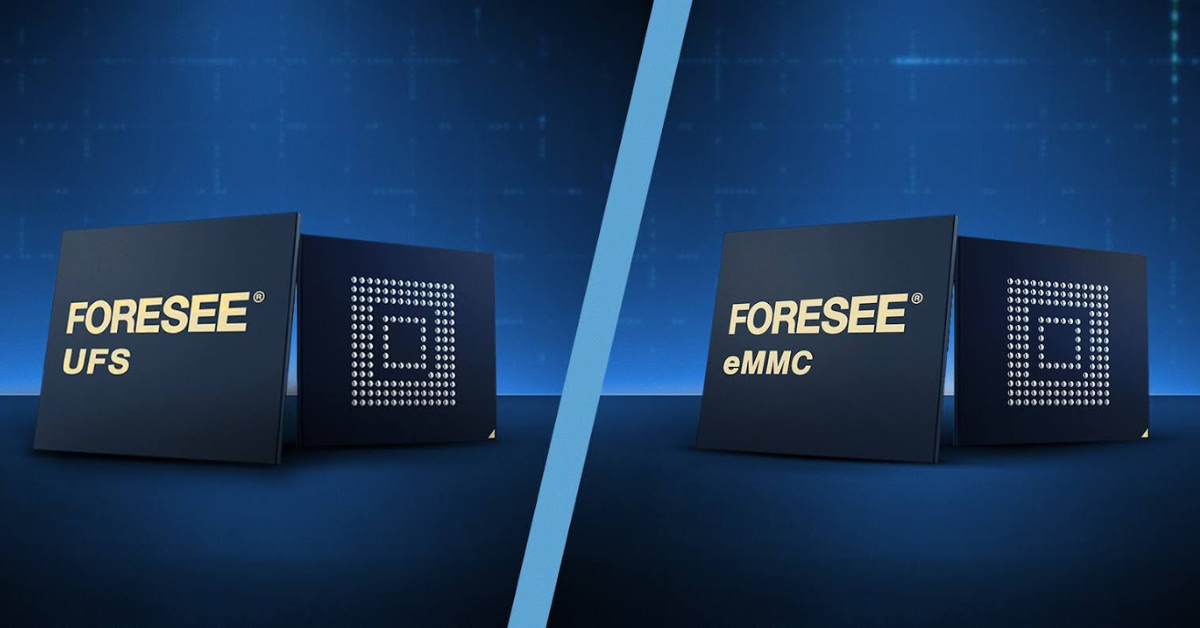
The fundamental difference between UFS vs eMMC lies in their interface architectures, which directly impact how your processor communicates with storage. Understanding these differences helps predict real-world system behavior beyond benchmark numbers.
eMMC uses a half-duplex parallel interface based on the MMC standard. A processor sends commands and data over the same 8-bit bus, meaning read and write operations cannot happen simultaneously. Think of it as a single-lane road where traffic flows in one direction at a time – functional, but with inherent bandwidth limitations.
UFS employs a full-duplex serial interface using MIPI M-PHY and UniPro protocols. This creates separate lanes for command, data in, and data out operations. Commands can execute while data transfers continue, enabling true multitasking at the storage level. It’s more like a multi-lane highway with dedicated lanes for different traffic types.
Interface Speed Specifications
- eMMC 5.1: Up to 400MB/s theoretical, 200MB/s to 300MB/s typical sustained throughput
- UFS 2.1: Up to 1.45 GB/s theoretical, 600MB/s to 900MB/s sustained performance
- UFS 3.0/3.1: Up to 2.9GB/s theoretical, 1.2GB/s to 1.8GB/s sustained rates
But raw speed numbers don’t tell the complete story for embedded applications. Queue depth, command overhead, and thermal throttling behavior matter more in many real-world scenarios.
Command Queue Management
eMMC processes commands sequentially with limited queue depth. When your system needs to read sensor data while logging diagnostic information, operations queue up and wait.
UFS supports Native Command Queuing (NCQ) with up to 32 outstanding commands. Multiple operations execute concurrently, reducing latency spikes that can affect real-time system performance. This architectural difference becomes critical for ADAS applications processing camera, radar, and lidar data streams simultaneously.
What Performance Differences Actually Matter in Embedded Systems?
Performance benchmarks often focus on consumer use cases, but embedded systems face different challenges. Temperature cycling, sustained write loads, and mixed workload patterns reveal the practical differences between UFS vs eMMC that impact your design decisions.
Random Access Performance
Random read/write performance separates UFS from eMMC in embedded applications more than sequential throughput. When your system accesses configuration files, logs diagnostic data, and reads sensor calibration simultaneously, random I/O performance determines overall responsiveness.
- eMMC Random Read: 8,000 to 15,000 IOPS typical
- eMMC Random Write: 500 to 2,000 IOPS typical
- UFS 2.1 Random Read: 40,000 to 60,000 IOPS
- UFS 2.1 Random Write: 20,000 to 35,000 IOPS
These differences become pronounced in automotive applications. GPS navigation systems updating map data while logging trip information and caching route calculations see dramatic responsiveness improvements with UFS storage. The command queuing eliminates the stuttering behavior common with eMMC under mixed workloads.
Thermal Performance Behavior
Embedded systems often operate in challenging thermal environments — automotive underhood applications, industrial automation enclosures, or outdoor IoT deployments. Both UFS and eMMC implement thermal throttling, but their behavior patterns differ significantly.
eMMC thermal throttling typically gradually reduces performance as temperatures rise above 70°C. This predictable behavior makes thermal management easier to design around but limits peak performance in high-temperature scenarios.
UFS implements more aggressive thermal protection with steeper performance reduction curves. While this protects the storage device, it can create unexpected performance drops in thermally constrained applications. Design teams must account for worst-case thermal scenarios when specifying UFS for embedded systems.
Which Storage Technology Fits Your Application Requirements?
Choosing between UFS and eMMC depends on your specific system requirements rather than just performance specifications. Different embedded applications have varying priorities for throughput, cost, power consumption, and integration complexity.
Automotive Applications
Modern automotive systems span from basic infotainment to advanced driver assistance, each with different storage requirements that favor either UFS or eMMC solutions.
- Infotainment Systems: UFS provides smoother multimedia playback and faster app loading. The improved random access performance eliminates audio stuttering during navigation updates or phone calls.
- ADAS and Autonomous Driving: UFS command queuing simultaneously supports multiple sensor data streams. Camera, radar, and lidar processing can access storage concurrently without performance degradation.
- Telematics Control Units: eMMC often suffices for basic connectivity and diagnostic logging. For many applications, the cost savings and proven reliability outweigh the performance benefits of UFS.
- Digital Instrument Clusters: UFS reduces boot times and enables smoother graphics transitions. Real-time gauge updates don’t interfere with navigation or trip computer functions.
Industrial IoT Applications
Industrial environments present unique challenges — vibration, temperature extremes, and long deployment cycles that influence storage selection beyond pure performance metrics.
- Edge Computing Gateways: UFS supports multiple sensor data streams and local AI processing. Command queuing prevents individual sensor updates from blocking critical control loops.
- Surveillance Systems: Continuous video recording with simultaneous remote access favors the UFS full-duplex interface. eMMC can bottleneck when uploading footage while continuing to record.
- Process Control Systems: eMMC reliability and predictable behavior often outweigh UFS performance advantages. Industrial systems prioritize stability over peak throughput.
- Ruggedized Tablets: UFS improves field application responsiveness and multitasking. Technical documentation, diagnostic tools, and communication apps run simultaneously without performance degradation.
Mobile and Handheld Devices
Battery-powered embedded systems balance performance against power consumption, making the choice between UFS vs eMMC more nuanced than in stationary applications.
- Medical Diagnostic Equipment: UFS enables real-time image processing while storing patient data. Concurrent data operations benefit ultrasound and portable X-ray systems.
- Rugged Handheld Computers: UFS improves barcode scanning applications that simultaneously update inventory databases and sync with enterprise systems.
- Portable Test Equipment: Mixed workloads — capturing measurement data, generating reports, and uploading results — favor UFS command queuing capabilities.
How Do You Future-Proof Your Storage Architecture Decision?
Embedded system lifecycles often span 5-10 years, making future-proofing considerations critical when choosing between UFS vs eMMC. Technology roadmaps, component availability, and evolving performance requirements all influence long-term design decisions.
Technology Roadmap Analysis
UFS continues to advance, with version 4.0 promising PCIe-level performance and improved power efficiency. The JEDEC roadmap shows active development through 2027, with backward compatibility maintained across generations. This forward momentum suggests UFS will remain viable for new designs requiring long-term component availability.
eMMC development has slowed significantly beyond version 5.1. While existing eMMC solutions remain stable and widely available, the technology approaches its performance ceiling. Starting today, new embedded projects should consider whether eMMC performance will meet requirements throughout the product lifecycle.
Supply Chain Considerations
Component availability differs significantly between UFS vs eMMC across various temperature grades and capacity options. This impacts design flexibility and long-term sourcing strategies.
- eMMC Availability: There is a broad supplier base with readily available automotive and industrial temperature grades. Multiple second-source options exist for most capacity and performance points.
- UFS Availability: Fewer suppliers offering automotive-grade parts. Higher-end UFS solutions concentrate among major semiconductor manufacturers with limited second-sourcing options.
- Cost Trajectory: eMMC pricing remains stable with gradual declines. UFS costs decrease rapidly but from a higher baseline pricing, particularly for automotive-qualified parts.
System Integration Evolution
Processor roadmaps increasingly favor UFS interfaces for new SoC designs. Mobile processors from Qualcomm, MediaTek, and others prioritize UFS controllers over eMMC support, which influences component selection for embedded systems using mobile-derived processors.
However, microcontroller and FPGA platforms continue supporting eMMC interfaces alongside newer storage options. Industrial and automotive applications using these platforms retain eMMC viability for specialized requirements.
What Framework Should Guide Your Storage Selection Decision?
Rather than choosing based on performance specifications alone, use this systematic approach to evaluate UFS vs eMMC for your specific embedded system requirements. Each factor carries a different weight depending on your application constraints.
Performance Requirements Assessment
Start by quantifying your storage performance needs rather than assuming higher specifications provide better results.
- Workload Characterization: Measure or estimate sequential vs random I/O ratios, average file sizes, and concurrent access patterns. Many embedded applications have lighter storage requirements than consumer devices.
- Latency Sensitivity: Determine whether your application can tolerate occasional performance spikes or requires consistent response times. Real-time control systems favor predictable eMMC behavior over UFS peak performance.
- Sustained Performance Needs: Calculate required throughput for continuous operation scenarios. Video recording, data logging, and sensor fusion applications need sustained rather than burst performance.
System Constraint Evaluation
Physical and environmental constraints often outweigh performance specifications in embedded system storage decisions.
- Power Budget Analysis: UFS typically consumes 20 to 40 percent more power during active operations. Battery-powered applications need detailed power consumption modeling across various operating scenarios.
- Thermal Design Impact: UFS generates more heat during peak operation. Thermally constrained enclosures may require additional cooling or performance derating with UFS storage.
- Board Space and Layout: UFS and eMMC have identical physical footprints, but UFS requires more complex signal routing. High-speed differential pairs need careful PCB design consideration.
- EMI/EMC Implications: UFS higher frequency signaling can impact electromagnetic compatibility. Automotive and industrial applications with strict EMC requirements may favor eMMC simplicity.
Business and Lifecycle Considerations
Technical specifications matter, but business factors ultimately determine storage selection success in embedded applications.
- Cost Impact Analysis: Compare total system cost, including storage device, PCB complexity, and thermal management requirements. UFS performance benefits must justify higher implementation costs.
- Supply Chain Risk Assessment: Evaluate supplier diversity, automotive qualification status, and long-term availability commitments. Multi-year embedded projects need stable component sourcing.
- Development Timeline Considerations: UFS interfaces require more complex driver development and validation. Projects with tight development schedules may benefit from proven eMMC implementations.
Making the Right Storage Decision for Your Embedded System
The choice between UFS vs eMMC ultimately depends on matching storage capabilities to your specific system requirements rather than choosing the highest-performance option.
Choose UFS when your embedded system benefits from concurrent data operations, requires consistent high-throughput performance, or needs to handle mixed workloads efficiently. Automotive ADAS applications, industrial edge computing, and mobile diagnostic equipment represent ideal UFS applications where the performance advantages justify higher implementation complexity.
Select eMMC for embedded systems, prioritizing cost optimization, predictable behavior, and proven reliability over peak performance. Telematics units, basic IoT gateways, and industrial control systems often achieve optimal results with eMMC storage while avoiding UFS complexity and cost.
Start your storage evaluation by characterizing your performance requirements through measurement or detailed modeling. Many embedded applications perform adequately with eMMC while avoiding the additional design complexity UFS introduces. However, systems with genuinely demanding storage requirements will see measurable improvements with UFS implementation.
The storage decision you make today will impact your product throughout its lifecycle. Take time to evaluate both current embedded storage needs and future requirements before committing to either UFS or eMMC for your next embedded system design.