

Standard NAND flash memory operates reliably in controlled environments like office computers, smartphones, and tablets. However, automotive applications demand performance under conditions that destroy consumer-grade components within months.
The automotive environment subjects memory to temperature extremes ranging from -40°C to +125°C, constant vibration, electromagnetic interference, and power fluctuations. Standard NAND flash typically operates within 0°C to 70°C range and lacks the error correction, wear leveling, and thermal management required for automotive durability.
In the past, development teams have selected consumer-grade NAND flash based solely on cost considerations, only to discover reliability failures during qualification testing. The hidden costs of redesign cycles, delayed product launches, and warranty claims far exceed the initial savings from cheaper memory components.
AEC-Q100 Compliance: The Automotive Memory Standard
AEC-Q100 qualification represents the automotive industry’s reliability standard for integrated circuits. This qualification process tests components through temperature cycling, high-temperature storage, bias temperature stress, and electromagnetic compatibility scenarios that simulate real-world automotive conditions.
For NAND flash memory, AEC-Q100 compliance means:
- Temperature Grade Requirements: Grade 1 (-40°C to +125°C) or Grade 2 (-40°C to +105°C) operation with guaranteed data retention
- Endurance Testing: Minimum 100,000 program/erase cycles with error correction capability maintaining data integrity
- Data Retention: 10-year minimum data retention at maximum operating temperature
- ESD Protection: Human Body Model (HBM) and Charged Device Model (CDM) protection exceeding consumer requirements
- Electromagnetic Compatibility: Immunity to automotive electromagnetic environments per ISO 11452 standards
These requirements aren’t arbitrary specifications. They reflect where failure can be inconvenient and potentially dangerous.
High Endurance Requirements for Automotive NAND Flash
Automotive applications generate continuous data writes that quickly exhaust standard NAND flash endurance limits. Consider these automotive data generation patterns:
Infotainment Systems: Navigation updates, media caching, user preference storage, and software updates create constant write activity. During normal operation, a typical infotainment system writes 10GB-50GB daily.
Advanced Driver Assistance Systems (ADAS) Modules: Camera calibration data, radar signatures, sensor fusion parameters, and machine learning model updates require frequent storage updates. During active learning phases, ADAS systems may write 100GB+ daily.
Telematics Control Units: Vehicle diagnostics, GPS tracking, cellular communication logs, and over-the-air update staging generate continuous background writes throughout vehicle operation.
Standard consumer NAND flash offers 3,000-10,000 program/erase cycles. Automotive-grade NAND flash offers 100,000+ cycles, supported by advanced wear-leveling algorithms that evenly distribute writes across memory cells. This difference determines whether your memory system survives 5-10 years of automotive operation or fails within months.
Critical Automotive Applications for NAND Flash Memory
Infotainment System Storage
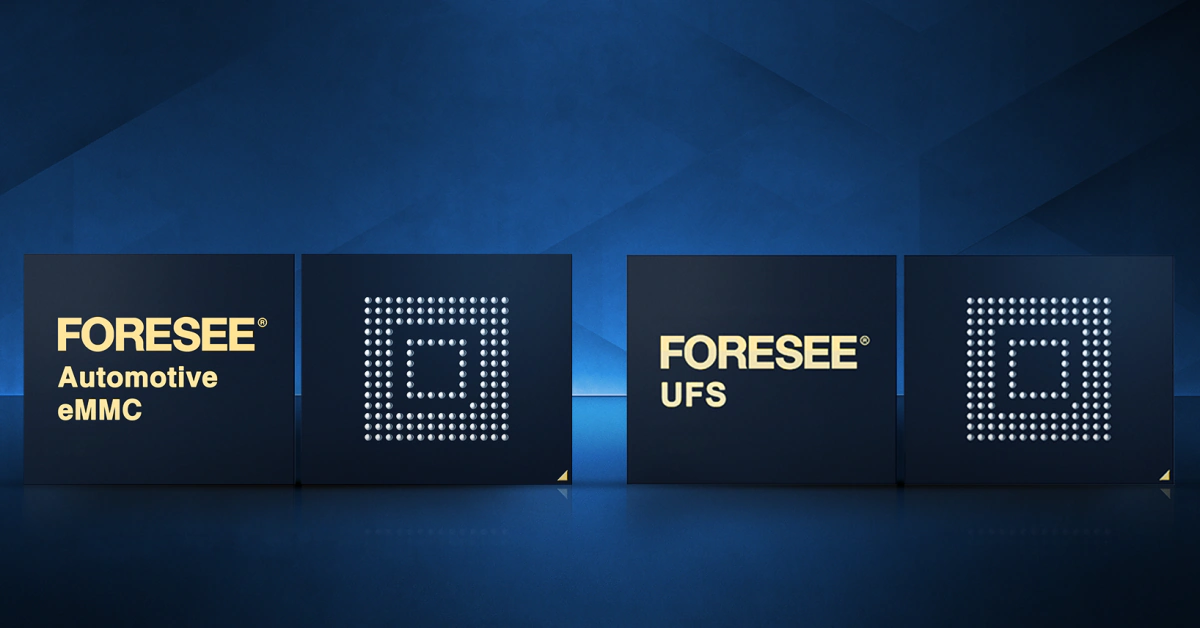
Modern infotainment systems function as automotive computers, managing navigation databases, media libraries, connectivity protocols, and user interface rendering. These systems often utilize UFS and eMMC embedded storage alongside raw NAND flash to meet diverse performance requirements. These systems require NAND flash memory that maintains performance consistency across temperature ranges while handling frequent software updates and user data changes.
Lexar Enterprise automotive NAND flash solutions provide the thermal stability and write endurance needed for infotainment reliability. Our memory modules maintain consistent read/write performance from -40°C to +125°C while supporting the high-capacity storage requirements of modern navigation and entertainment systems.
ADAS Memory Requirements
Advanced driver assistance systems depend on split-second data processing for collision avoidance, lane keeping, and autonomous driving functions. Understanding ADAS memory requirements is critical for selecting appropriate storage solutions for these safety-critical applications. ADAS modules require NAND flash memory with ultra-low latency, high reliability, and the ability to maintain data integrity during power fluctuations.
The memory subsystem must handle simultaneous sensor data logging, calibration parameter updates, and real-time algorithm processing without introducing delays that could compromise safety systems. Automotive-grade NAND flash provides the consistent performance and reliability that ADAS applications demand.
Telematics and Connectivity Storage
Vehicle telematics systems manage cellular connectivity, GPS tracking, diagnostic data collection, and over-the-air update capabilities. These systems require robust NAND flash memory that maintains data integrity through ignition cycles, temperature variations, and electromagnetic interference from vehicle electrical systems.
Telematics applications often deploy automotive eMMC solutions that integrate NAND flash with controllers providing power-loss protection features that prevent data corruption during unexpected power interruptions. This protection ensures diagnostic data, update files, and communication logs remain intact across all operating conditions.
Lexar Enterprise Automotive NAND Flash Solutions
Lexar Enterprise provides AEC-Q100-qualified NAND flash memory specifically designed for automotive applications. Our automotive memory solutions address the unique challenges of vehicle environments while supporting the performance requirements of modern automotive systems.
Automotive-Grade Specifications:
- Temperature range: -40°C to +125°C operation
- Endurance: 100,000+ program/erase cycles
- Data retention: 10+ years at maximum operating temperature
- AEC-Q100 Grade 1 qualification
- Enhanced ECC with power-loss protection
Application-Optimized Performance:
- Low-latency access for real-time ADAS processing
- Consistent performance across temperature ranges
- Advanced wear leveling for extended operational life
- Electromagnetic interference immunity per automotive standards
Beyond raw NAND flash, our automotive SSD solutions integrate these components into complete storage systems optimized for vehicle applications. Our engineering team works directly with automotive OEMs to optimize memory configurations for specific applications, ensuring integration success and long-term reliability across vehicle platforms.
Engineering Considerations for Automotive NAND Integration
Successful automotive NAND flash integration requires understanding the interaction between memory specifications and system-level requirements. Engineers must evaluate beyond storage capacity and speed, including thermal characteristics, power consumption, and electromagnetic compatibility within the vehicle’s electrical architecture.
Thermal Management: Automotive NAND flash generates heat during operation, which must be dissipated effectively to maintain performance and reliability. Consider heat sink requirements, airflow patterns, and proximity to other heat-generating components during printed circuit board (PCB) layout.
Power Supply Design: Automotive electrical systems experience voltage fluctuations, load dumps, and power interruptions that can corrupt memory data. To maintain data integrity, implement appropriate power supply filtering, backup power systems, and power-loss protection.
EMC Compliance: Vehicle electromagnetic environments include ignition systems, electric motors, radio frequency transmissions, and switching power supplies. Select NAND flash with proven EMC performance and design PCB layouts that minimize electromagnetic susceptibility.
Testing and Validation Requirements
Automotive NAND flash requires extensive testing beyond standard qualification procedures. Validation testing should include thermal cycling across the full automotive temperature range, vibration testing per automotive standards, and electromagnetic compatibility verification.
Accelerated Life Testing: To predict long-term reliability, memory samples are subjected to elevated temperature and voltage stress. This testing identifies potential failure modes and validates endurance specifications under accelerated aging conditions.
System-Level Integration Testing: Verify NAND flash performance within the complete automotive system, including interaction with processors, power management, and other subsystems. This testing ensures memory performance remains consistent across all operating conditions.
Field Validation: Conduct extended testing in actual vehicles across diverse geographic and climatic conditions. Field validation provides real-world performance data that laboratory testing cannot replicate.
The Future of Automotive Memory Starts with Your Next Design Decision
Automotive-grade NAND flash memory isn’t just higher-specification storage – it’s the foundation for reliable vehicle systems that protect your brand reputation and ensure customer safety.
When selecting Lexar Enterprise automotive NAND flash solutions, you choose memory technology that meets AEC-Q100 standards, provides the endurance and reliability your applications demand, and comes with the engineering support needed for successful automotive integration. Your vehicle platforms deserve memory components that match your engineering standards.
Start your next automotive project with confidence. Contact Lexar Enterprise to discuss your NAND flash requirements and discover how our automotive memory solutions support your development success.
Frequently Asked Questions About Automotive NAND Flash Memory
What is the difference between eMMC and UFS for automotive applications?
eMMC and UFS are both NAND flash packaging standards used in automotive systems, but they differ significantly in performance and interface architecture.
- eMMC uses a half-duplex interface, meaning it can either read or write at a given moment – not both simultaneously. It is well-suited for cost-sensitive applications like telematics control units and instrument clusters where bandwidth demands are moderate.
- UFS uses a full-duplex serial interface that supports simultaneous read and write operations. This makes UFS the preferred choice for ADAS modules, high-resolution infotainment systems, and camera data pipelines where throughput and low latency are critical.
For a detailed breakdown of interface speeds, command queuing, and application-by-application guidance, see our full guide: UFS vs eMMC: The Complete Guide for Embedded System Design Decisions.
How does NAND flash cell type (SLC, MLC, TLC) affect automotive performance?
NAND flash cell type directly determines endurance, speed, and reliability – all of which have real consequences in automotive applications.
- SLC (Single-Level Cell) stores one bit per cell, delivering the highest endurance (100,000+ P/E cycles), fastest write speeds, and widest operating temperature tolerance. Used in safety-critical and high-write-cycle applications.
- MLC (Multi-Level Cell) stores two bits per cell, offering a balance of endurance (around 10,000 P/E cycles) and density. Used in applications with moderate write activity.
- TLC (Triple-Level Cell) stores three bits per cell, maximizing storage density at the lowest cost per gigabyte, but with lower endurance (1,000-3,000 P/E cycles). Suitable for read-heavy applications like map storage and media libraries.
Cell type should be selected based on the write intensity of the specific application – not just storage capacity or unit cost. For a full comparison including QLC and industrial use case guidance, see: Comparing NAND Flash Technology: SLC, MLC, TLC, and QLC for Industrial Memory Applications.
Can the same automotive NAND flash be used across multiple vehicle platforms?
Yes – and for OEM engineering and procurement teams managing multi-platform programs, BOM standardization around a single qualified automotive NAND component is a practical strategy. An AEC-Q100 Grade 1 qualified component covers the thermal and reliability requirements of the most demanding vehicle environments, making it viable across platforms with less extreme operating conditions as well.
The more important consideration is interface and form factor compatibility across different ECU designs. If platform architectures use the same interface standard (eMMC or UFS) and physical footprint, a single qualified memory component can often serve multiple programs – reducing qualification overhead, simplifying supplier management, and improving long-term availability planning.
What happens to automotive NAND flash data during a power loss event?
Without power-loss protection, an unexpected power interruption during a write operation can corrupt the data being written and, in some cases, damage the memory cells involved. In automotive systems – where ignition cycles, load dumps, and voltage fluctuations are routine – this is a genuine design risk, not an edge case.
Automotive-grade NAND flash addresses this through two mechanisms:
- Power-loss protection (PLP) circuitry uses onboard capacitance to complete or safely abort any in-progress write operation when power is suddenly removed, preserving data integrity.
- Advanced ECC (Error Correction Code) detects and corrects bit errors that can result from partial writes or cell stress caused by abrupt power loss.
For a deeper look at power sequencing requirements, ECC margin planning, and integration mistakes that cause field failures, see: 7 Fatal Mistakes to Avoid When Integrating Embedded Memory into Harsh Environments.
How long does automotive NAND flash last in a vehicle?
Automotive NAND flash is designed and validated to match the service life of the vehicle systems it supports – typically 10 to 15 years. Two specifications define this directly:
- Data retention: AEC-Q100-qualified NAND flash guarantees a minimum of 10 years of data retention at maximum operating temperature.
- Endurance: Automotive-grade NAND flash is validated to 100,000+ program/erase cycles. Actual service life depends on the write intensity of the specific application – a high-write ADAS module will consume cycles faster than a low-write map storage unit.
Wear-leveling algorithms extend effective lifespan by distributing write operations evenly across memory cells. For accurate lifespan estimates, engineers should calculate expected daily write volume against the component’s total bytes written (TBW) rating. Cell type selection also plays a major role – see: Comparing NAND Flash Technology: SLC, MLC, TLC, and QLC for Industrial Memory Applications.